Living Geometry 2026 — 한국 미디어아트 · 인류세 미디어아트 · 인터랙티브 아트 큐레이터 가이드
〈Living Geometry 2026〉은 영등포라는 도시를 안트로포스피어(Anthroposphere, 인류권)의 관점에서 다시 읽는 전시다. 도시는 정지된 콘크리트의 집합이 아니라 인간, 비인간, 기술이 얽혀 움직이는 구조로 제시된다. KAIST 산업디자인학과 경험디자인연구실(XD Lab)이 기획·제작했으며, 4명의 작가가 7개의 작품을 선보인다.
큐레이토리얼 프레임
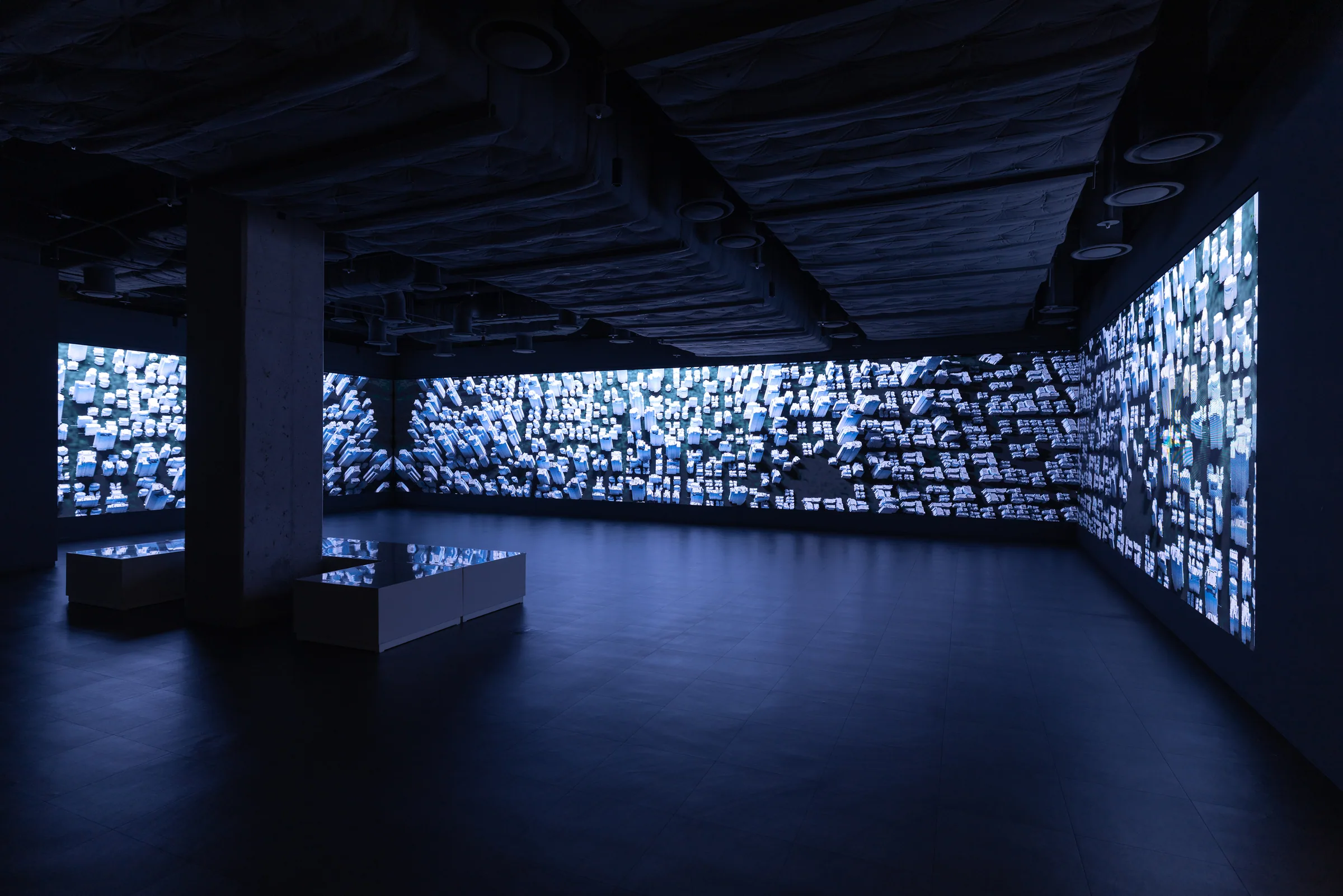
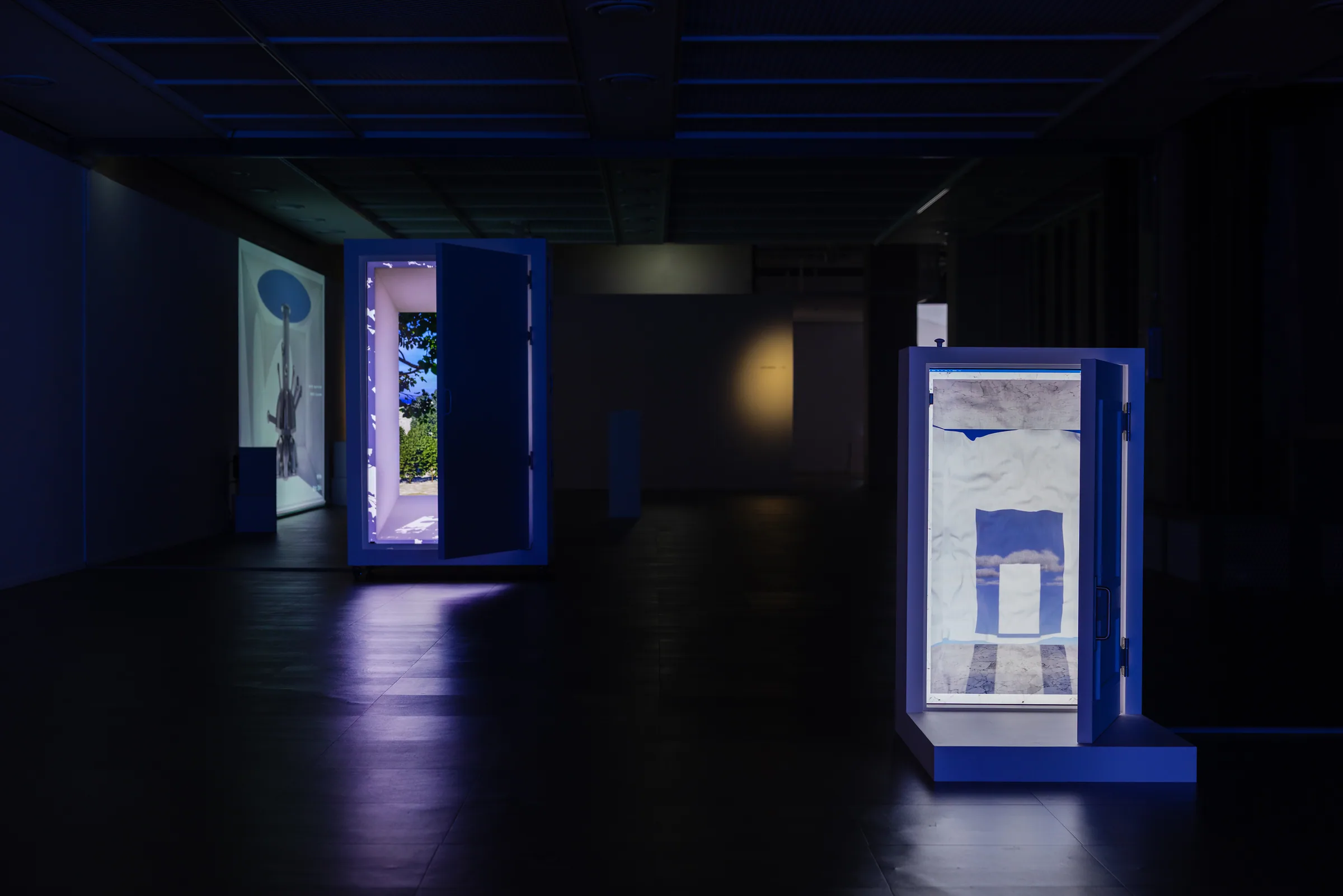
전시는 문래동의 철공소와 예술촌, 여의도의 마천루, 옛 공장 부지 위에 세워진 타임스퀘어, 그리고 그 지하의 영등포아트스퀘어를 하나의 도시적 배경으로 삼는다. ‘Living Geometry’는 이 도시를 차가운 물리적 대상으로 보지 않고, 여러 힘이 얽혀 계속 변형되는 기하학적 구조로 읽는다.
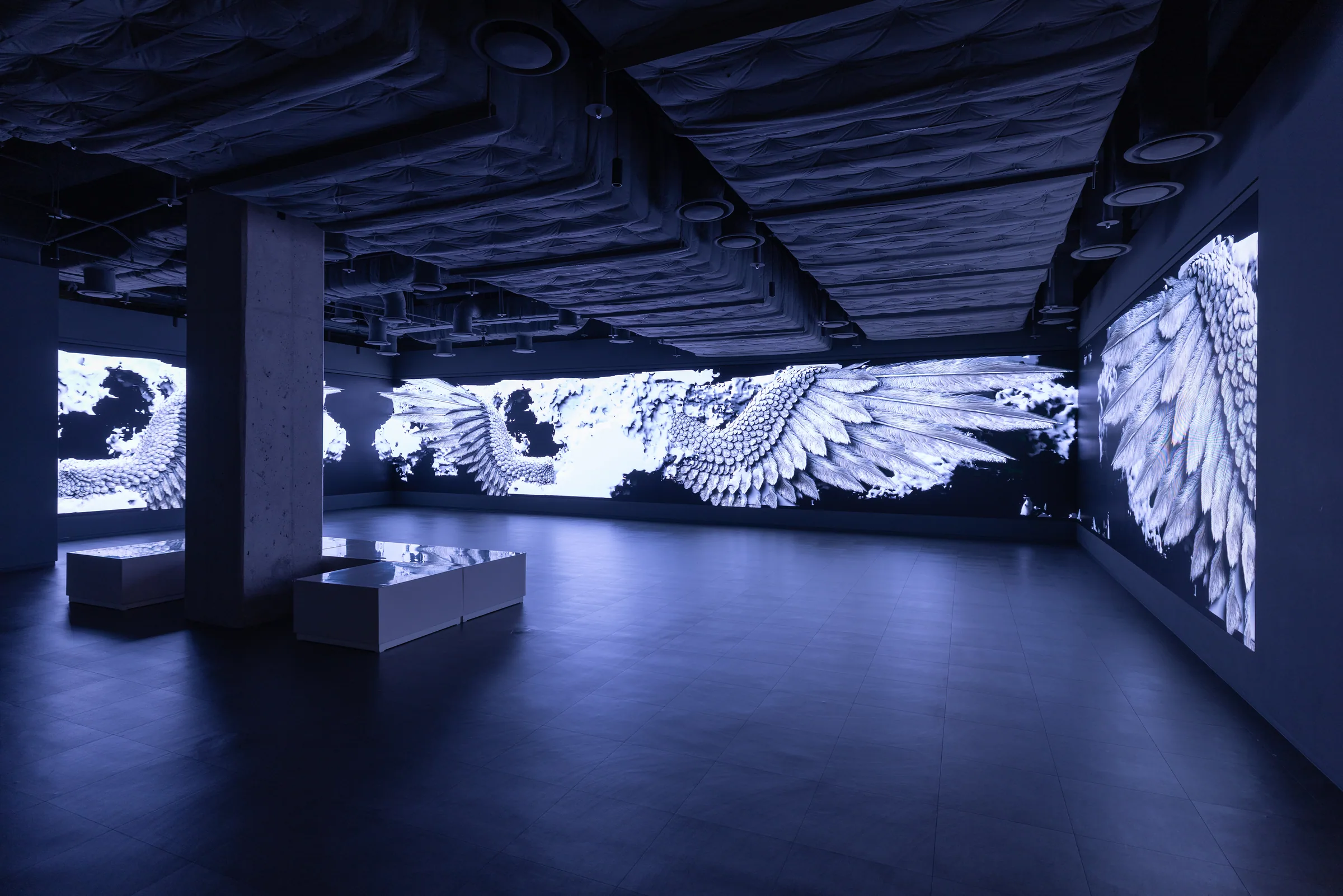
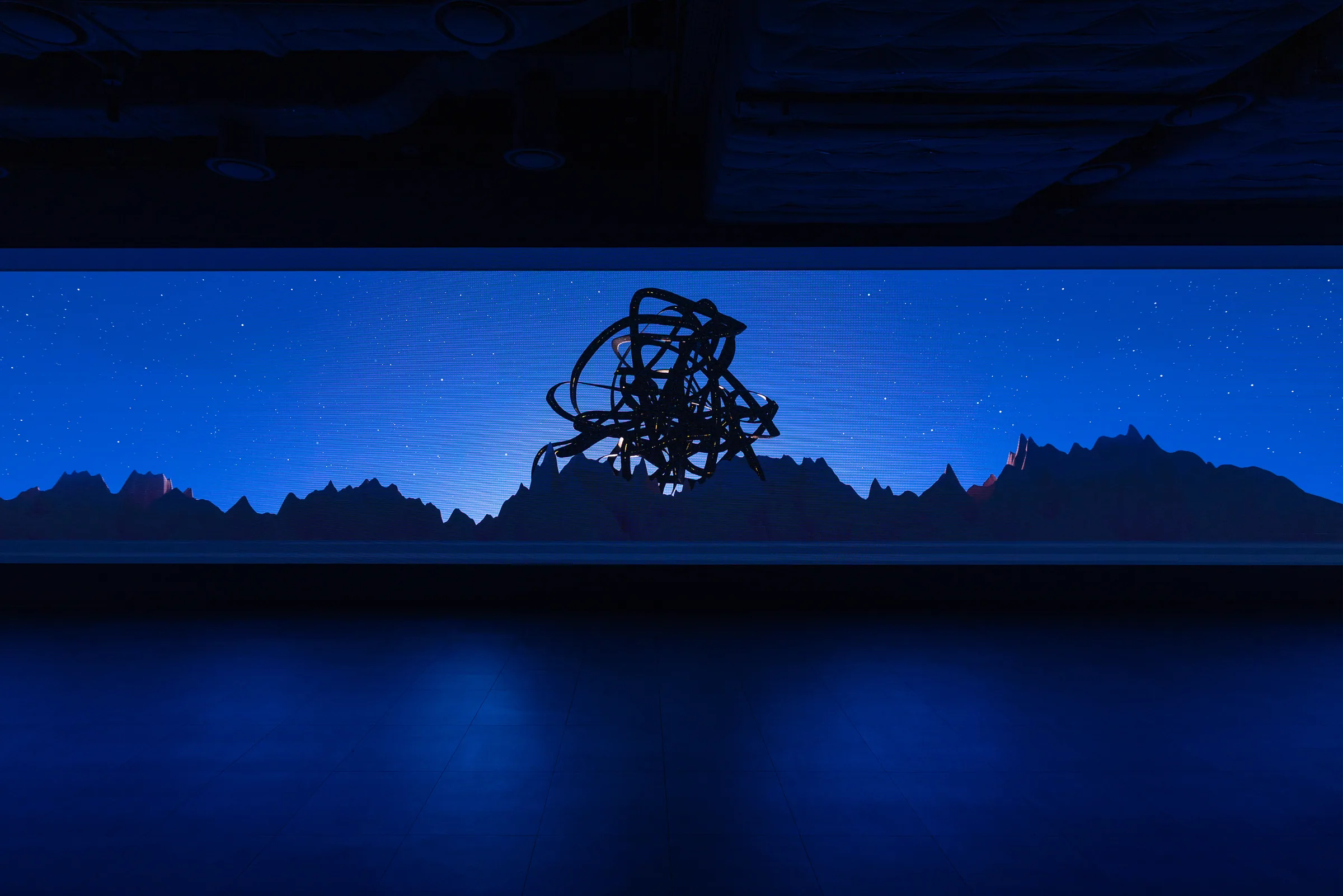
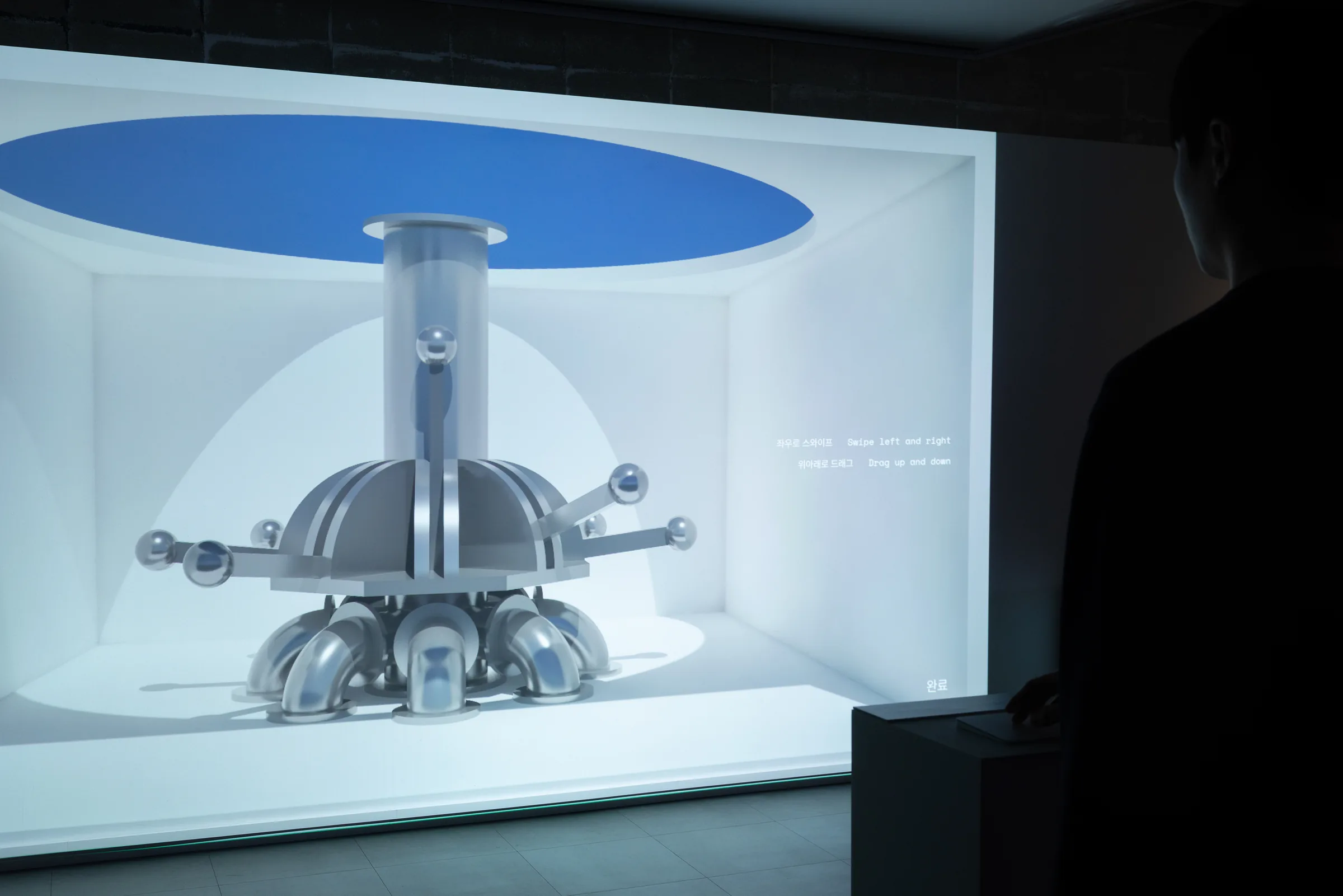
강이연 〈Technosphere〉는 인류가 구축한 인공적 물리 시스템, 즉 테크노스피어를 시각적 지질층으로 형상화한다. 〈Vanishing 2.0〉은 사라진 종에 대한 추모에서 출발해 사라짐 이후의 가능성을 묻는다. 서민혁 〈Post-Vanishing〉은 인간이 사라진 뒤에도 관성처럼 움직이는 도시를 세 생명체로 상상한다.
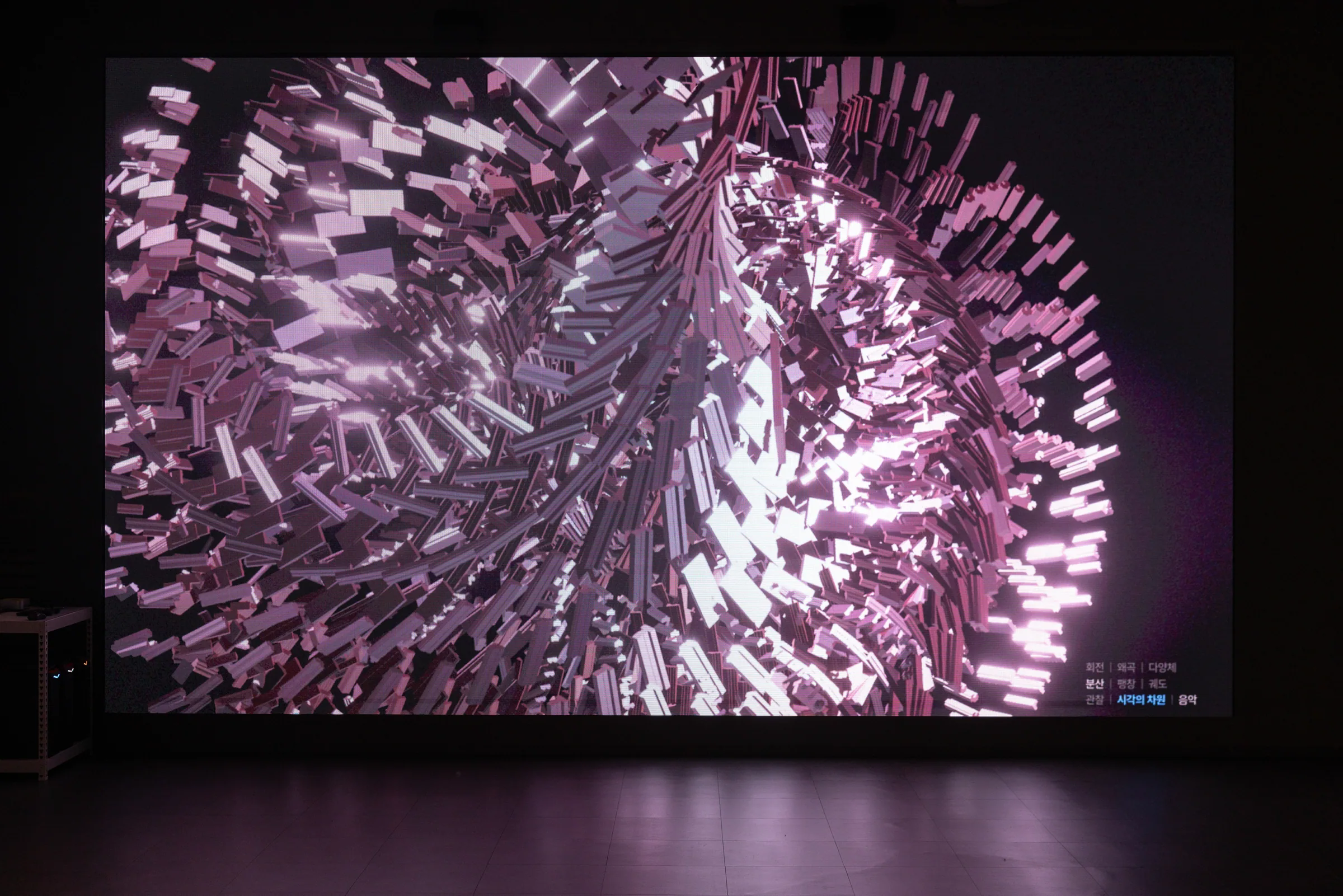
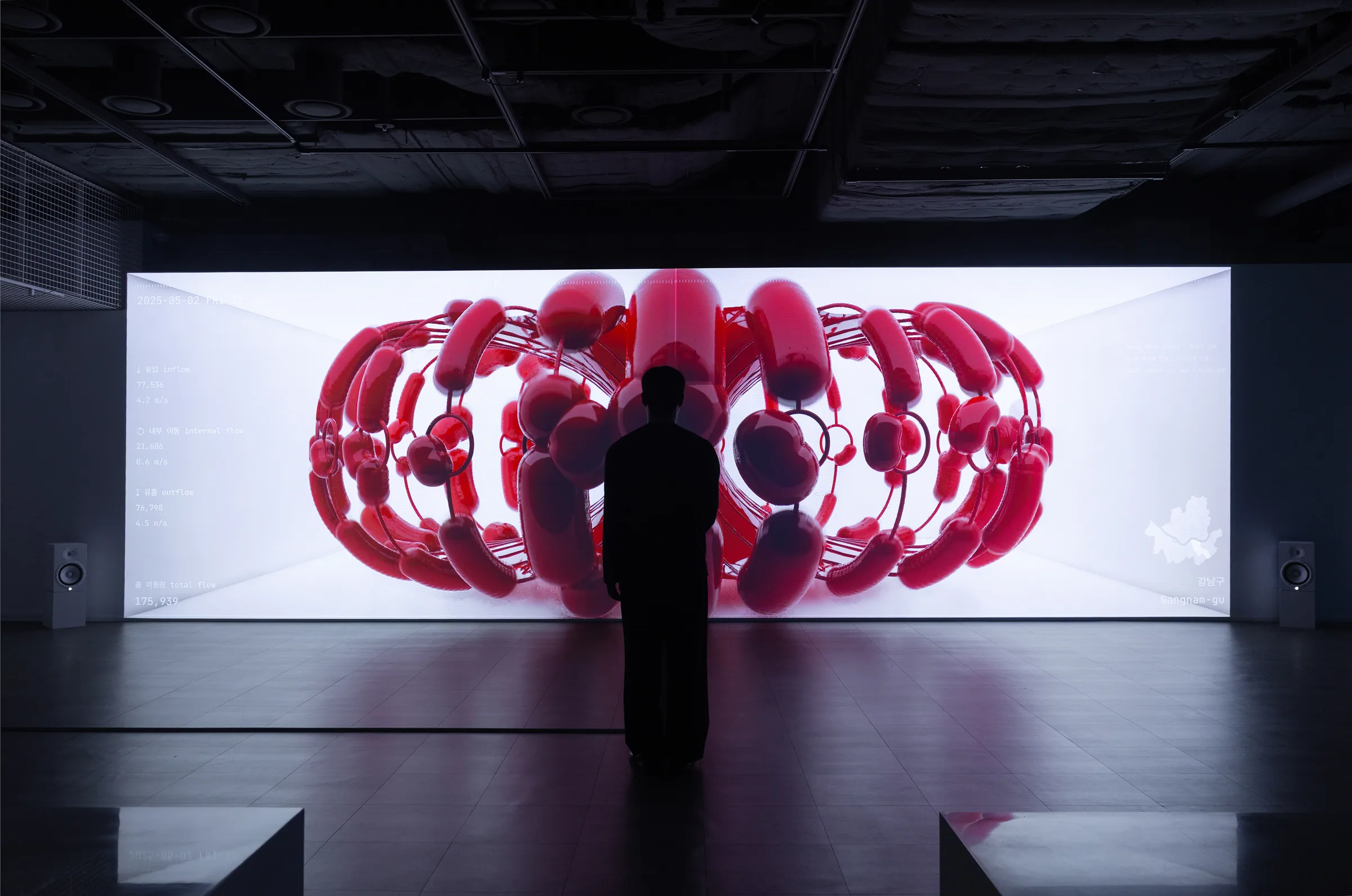
황인태 〈Goldilocks〉와 〈Vessel〉은 서울의 기상·이동 데이터를 관객의 조작과 생체 신호에 연결한다. 최정윤 〈반포자이즘〉은 한국 부동산의 가치 체계를 위치와 브랜드의 2차원 평면으로 읽고, 이를 다시 미분다양체로 접어 올리는 비평적 웹 작품이다.
컨텍스트 — XD Lab과 학제적 실천
XD Lab은 미디어아트와 디자인, 그리고 인간-컴퓨터 상호작용을 가로지르며, 인류세연구소 등과 협업해 다각적인 학제 간 연구를 수행해 왔습니다. Red Dot Award·iF Design Award를 수상했고, Leonardo Journal(MIT Press)·ACM SIGGRAPH·ACM DIS 등에 연구를 발표해 왔습니다. 〈Living Geometry 2026〉은 그 학제적 실천을 ‘공공 전시’의 시간성으로 옮긴 결과물입니다.
디렉터 강이연(Yiyun Kang)은 Google·NASA·Max Mara·BTS 등과 협업했고, Victoria and Albert Museum·COP28 등에서 개인전을 열었으며 TED 2026에서 강연한 미디어아트 작가입니다.
함께 살펴볼 작품
전시 7개 작품 — 영상 3점, 인터랙티브 설치 3점, 다중 기기 웹 작품 1점 — 을 순서대로 보면 전시의 도시·데이터·신체 감각이 비교적 선명하게 잡힙니다.
방문 정보
- 기간 :: 2026년 5월 1일 – 6월 28일 (월–일 매일 운영)
- 시간 :: 매일 10:00 – 18:00 (입장 마감 17:45)
- 관람료 :: 무료, 예약 불필요
- 장소 :: 영등포아트스퀘어 (서울 영등포구 영중로 15 타임스퀘어 B2F)
- 교통 :: 1호선·KTX 영등포역 도보 3분 / 1·2호선 신도림역 도보 10분
- 기획·개발 :: KAIST 경험디자인연구실 (XD Lab)
- 주최·주관 :: 영등포구 / 영등포아트스퀘어
- 작가와의 대화 :: 6/20 · 사전 신청 필요
전시 메인 페이지로 돌아가기
Living Geometry 2026 — A Curatorial Guide for Art Lovers · Korean Media Art · Anthropocene Art Korea
A media-art special exhibition that re-reads the city — Yeongdeungpo, Seoul — as the Anthroposphere, and beyond a stilled aggregate of concrete redefines it as Living Geometry, an organism in continual pulse where human, non-human, and technology entangle. Curated and developed by KAIST's Experience Design Lab (XD Lab), with four artists and seven works.
Curatorial frame
Drawing on Yeongdeungpo's stacked layers of time and space — Mullae-dong's metal-shop alleys and arts village, Yeouido's mirrored towers, contemporary commercial spaces risen over old factory grounds — the show reads the city as the vast imprint of human activity. 'Living Geometry' is a curatorial proposition: to translate the city from a cold physical object into an organism that ceaselessly transforms in geometric language.
Yiyun Kang's Technosphere visualises, as a geological stratum, the 'sixth sphere' of Anthropocene discourse — the totality of artificial physical systems built by humanity. Her Vanishing 2.0, a sequel to the Vanishing originally unveiled on COEX's outdoor screen, moves past elegy to imagine what might come after disappearance. Minhyeok Seo's Post-Vanishing departs from that closing creature and renders the matter, connection, and surface of a post-human city as three living forms.
Intae Hwang's Goldilocks and Vessel pair the city's data — Seoul's live weather, a year of mobility data — with visitors' bodily input (seven meteorological parameters; a pulse) to compose a 'collective Goldilocks zone' and a beating data sculpture. Jeanyoon Choi's Banpo-Xism reduces the value system of Korean real estate to a two-dimensional plane of location (Banpo) and brand (Xi), then, through the mathematical figure of integration, opens that plane back into a differentiable manifold — a critical web work staged across visitors' phones.
Context — XD Lab and interdisciplinary practice
XD Lab works across media art, design, and human–computer interaction, in collaboration with institutions including the Anthropocene Studies Institute. The lab has earned the Red Dot Award and iF Design Award and published in Leonardo Journal (MIT Press), ACM SIGGRAPH, and ACM DIS. Living Geometry 2026 is that practice translated into the public-facing rhythm of an exhibition.
Director Yiyun Kang has collaborated with Google, NASA, Max Mara, and BTS, with solo exhibitions at the Victoria and Albert Museum and COP28, and recent talks including TED 2026.
Works in the show
The full sequence — three video works, three interactive installations, one multi-device web work — is best read in one continuous visit.
Visit
- Dates :: May 1 – Jun 28, 2026 (daily)
- Hours :: Daily 10:00 – 18:00 (last entry 17:45)
- Admission :: Free, no reservation
- Venue :: YDP Artsquare (Times Square B2F, 15 Yeongjung-ro, Yeongdeungpo-gu, Seoul)
- Transit :: 3-min walk from Yeongdeungpo Station (Line 1 / KTX) · 10-min from Sindorim
- Curation & development :: KAIST Experience Design Lab (XD Lab)
- Host / Organizer :: Yeongdeungpo-gu · YDP Artsquare
- Artist talk :: Saturday, June 20, 2026 · Registration required
Back to exhibition main page