AI 아트·미디어아트·인터랙티브 아트 — 한 전시에서 세 갈래를 같이 보는 법 (Living Geometry 2026)
‘AI 아트’, ‘미디어아트’, ‘인터랙티브 아트’ — 자주 함께 묶이지만 결이 다른 세 갈래를 한 전시에서 같이 살펴볼 수 있는 한국 사례가 2026년 봄·여름 영등포아트스퀘어에서 열린다. KAIST XD Lab의 미디어아트 특별전 〈Living Geometry 2026〉은 단채널 영상 미디어아트 3점, 센서 기반 인터랙티브 설치 2점, 생성형 AI 기반 다중 기기 웹 작품 1점, 도시 데이터 인터랙티브 작품 1점을 한 자리에 둔다.
세 카테고리의 짧은 정의
미디어아트(media art)는 동영상·사운드·라이트 등 기술 매체 자체를 주된 표현 도구로 삼는 동시대 미술의 큰 범주다. 단채널·다채널 영상 작품, 미디어월 프로젝션, 사운드 인스털레이션 등이 이 안에 들어간다.
인터랙티브 아트(interactive art)는 관람객의 행위·신체·입력이 작품의 결과에 직접 반영되는 작업을 가리킨다. 센서·카메라·웹·입력장치를 매개로 관람객과 작품이 한 시스템을 이룬다. 1990–2000년대 인터랙션 디자인·HCI 연구와 함께 자리를 잡았다.
AI 아트(AI art / 생성형 AI 아트)는 머신러닝·생성 모델을 매체나 협업자로 사용하는 작업이다. 텍스트·이미지·사운드를 모델이 생성하고, 작가는 그 생성 과정 자체를 비평하거나 다듬는다. 2020년대 이후 빠르게 확장된 영역이다.
세 카테고리는 서로 배타적이지 않다. 한 작품이 미디어아트이면서 동시에 인터랙티브이고 AI 기반일 수 있다. 〈Living Geometry 2026〉은 그 겹침을 한 전시 안에서 확인할 수 있게 구성되어 있다.
단채널 영상 미디어아트 — 강이연·서민혁
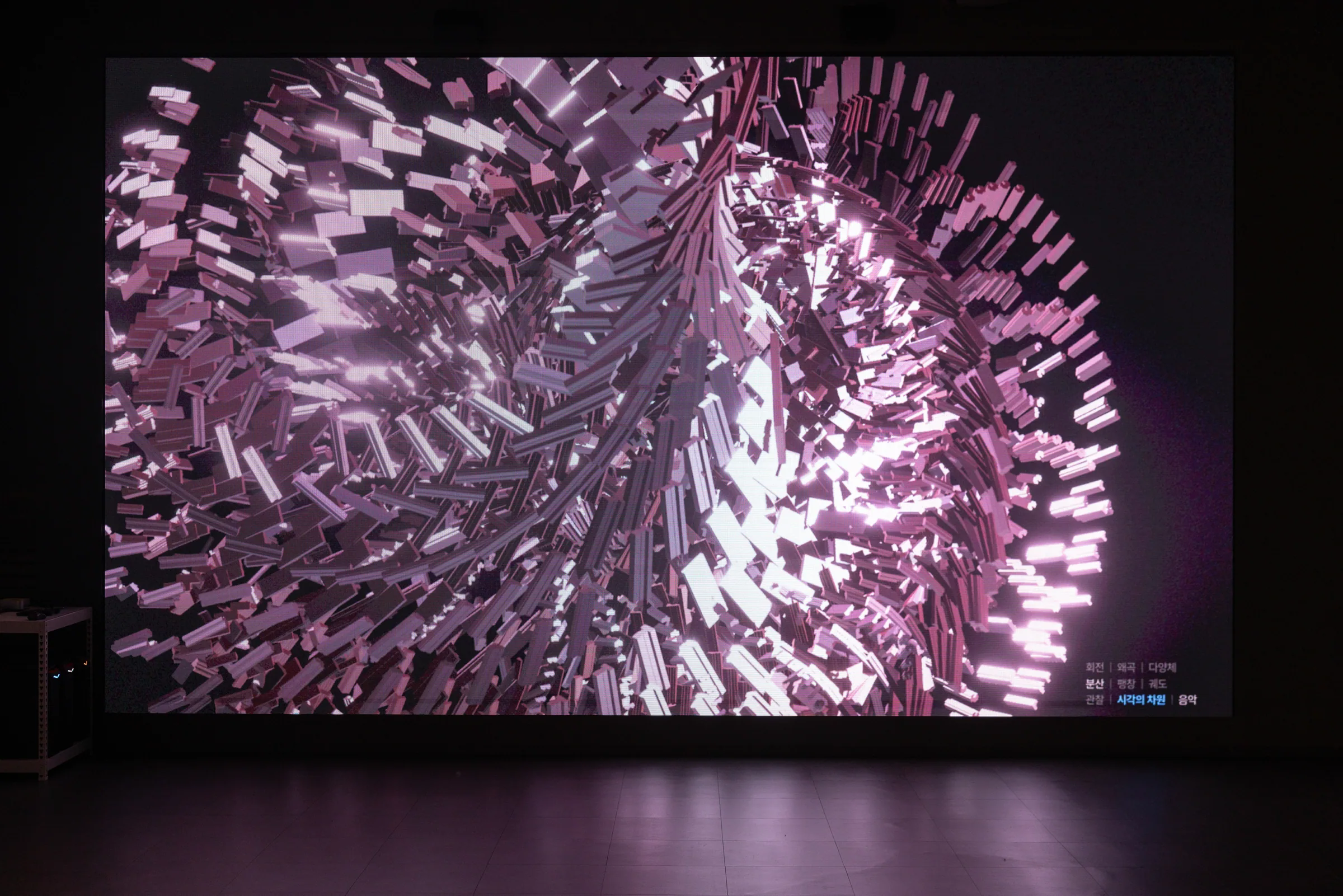
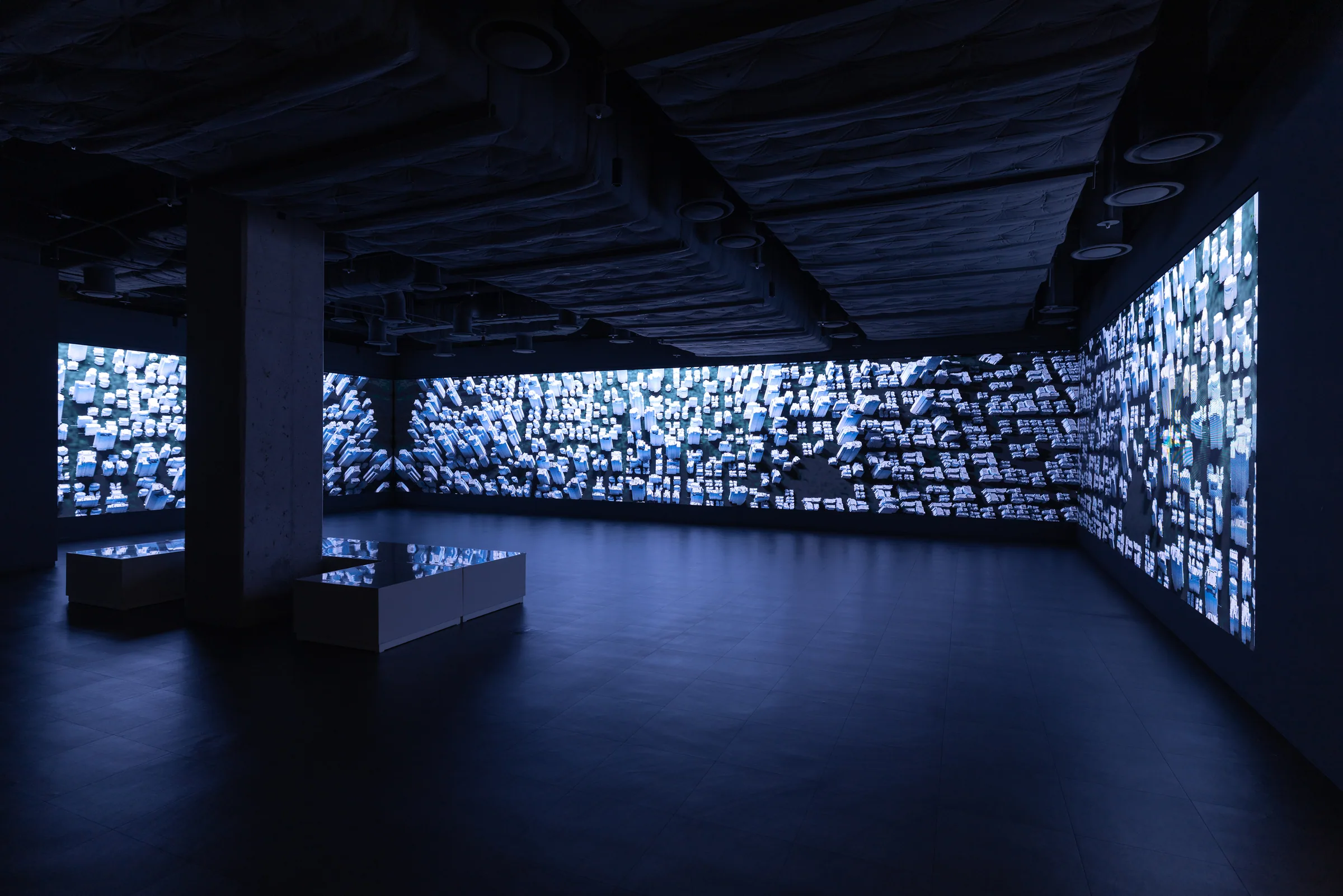
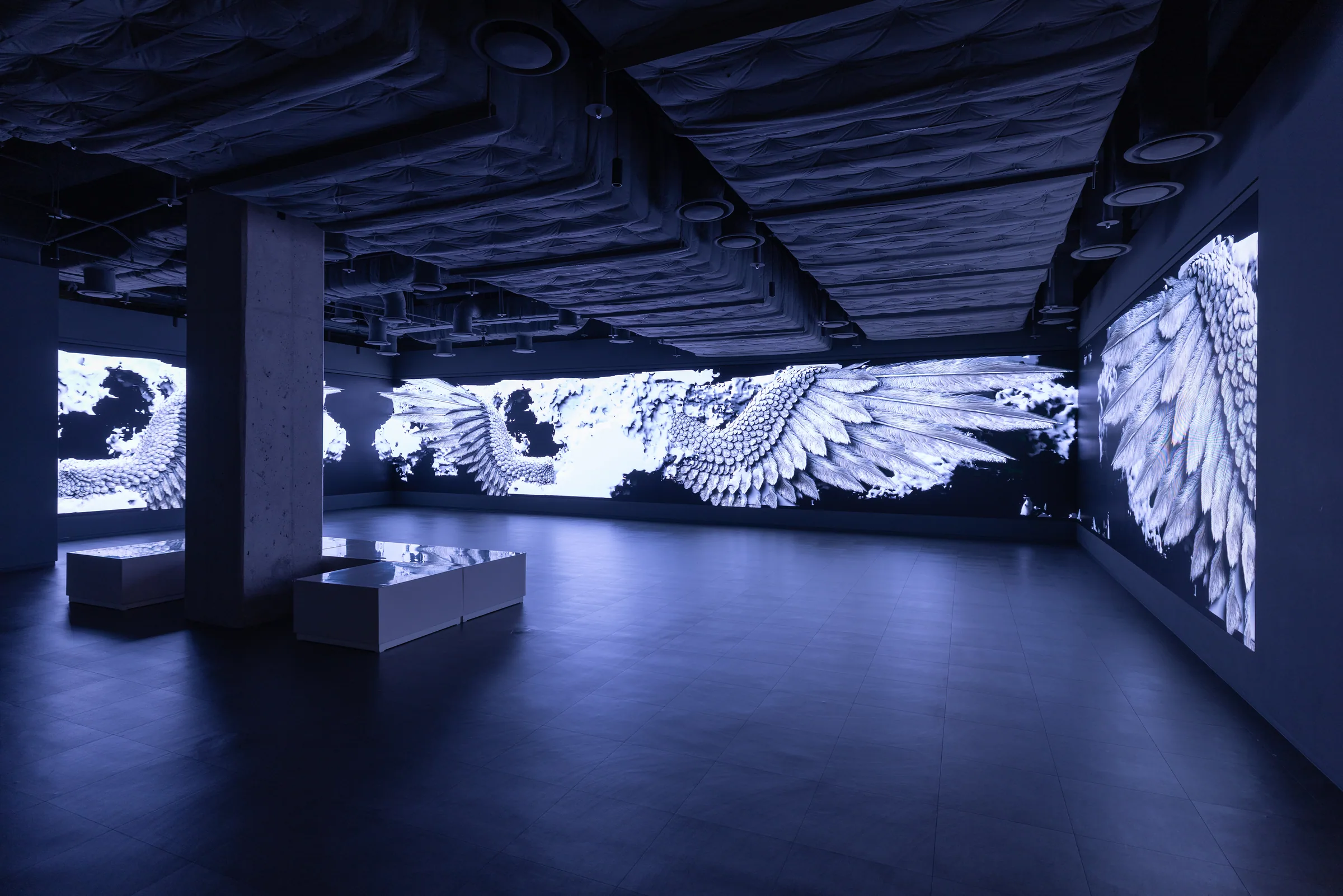
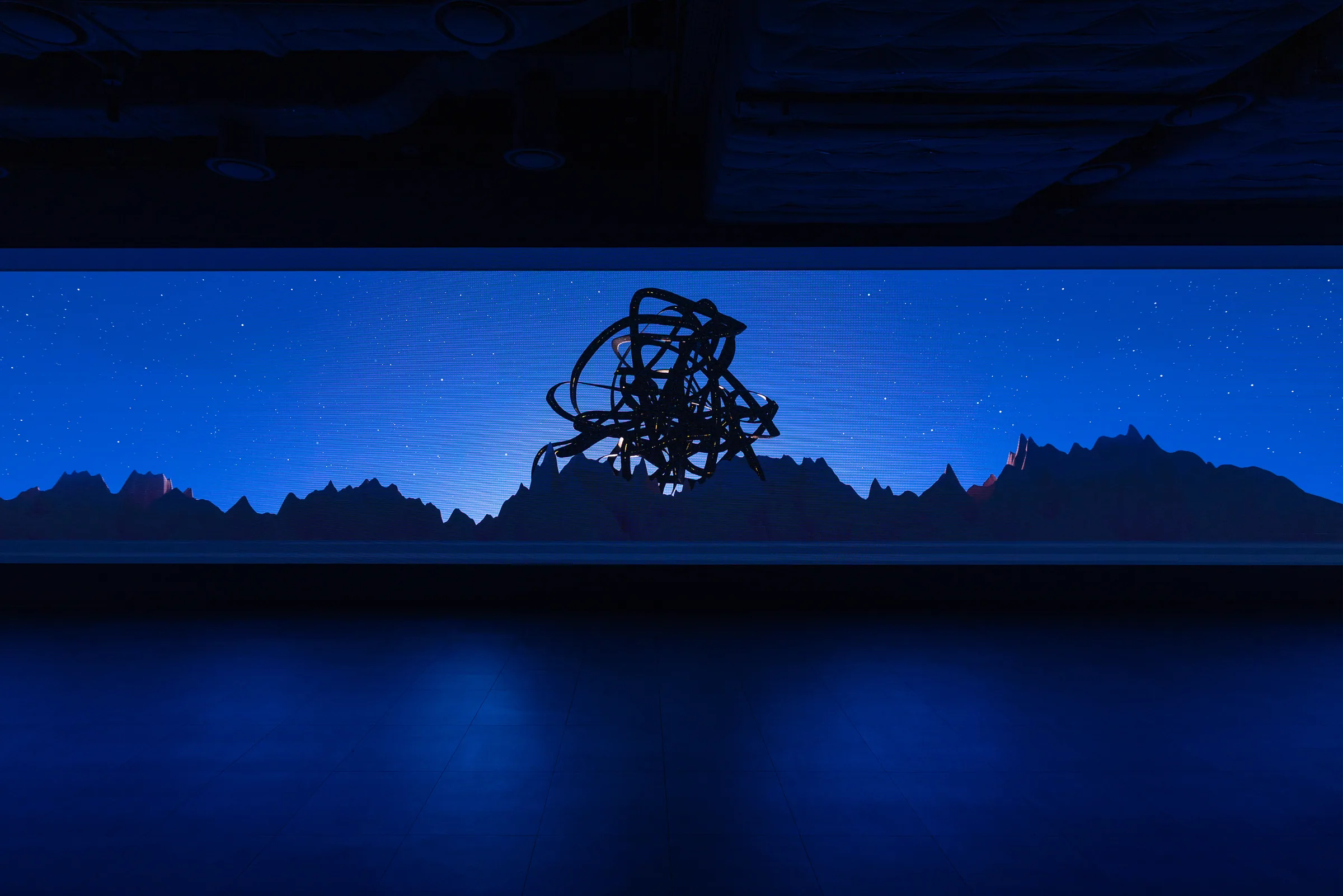
강이연의 〈Vanishing 2.0〉(2025)과 〈Technosphere〉(2026), 서민혁의 〈Post-Vanishing〉(2026)은 단채널 영상으로 인류세·테크노스피어·포스트 휴먼 도시를 다룬다. 사운드와 함께 약 2–4분 길이의 응축된 시청 경험으로, 미디어아트의 영상 영역에 속한다.
강이연의 〈Vanishing 2.0〉은 서울 코엑스 대형 전광판에서 처음 공개된 〈Vanishing〉의 후속으로, ‘여섯 번째 대멸종’과 ‘사라짐 이후의 가능성’을 다룬다. 〈Technosphere〉는 인류가 구축한 인공 권역을 알고리즘으로 자생하는 도시 구조물의 시각적 지질층으로 옮긴다.
이 세 작품은 관람객의 입력이 없는 ‘응시 기반’ 작업으로, 미디어아트의 전통적 단채널 영상 라인 안에 있다.
센서 기반 인터랙티브 아트 — 황인태
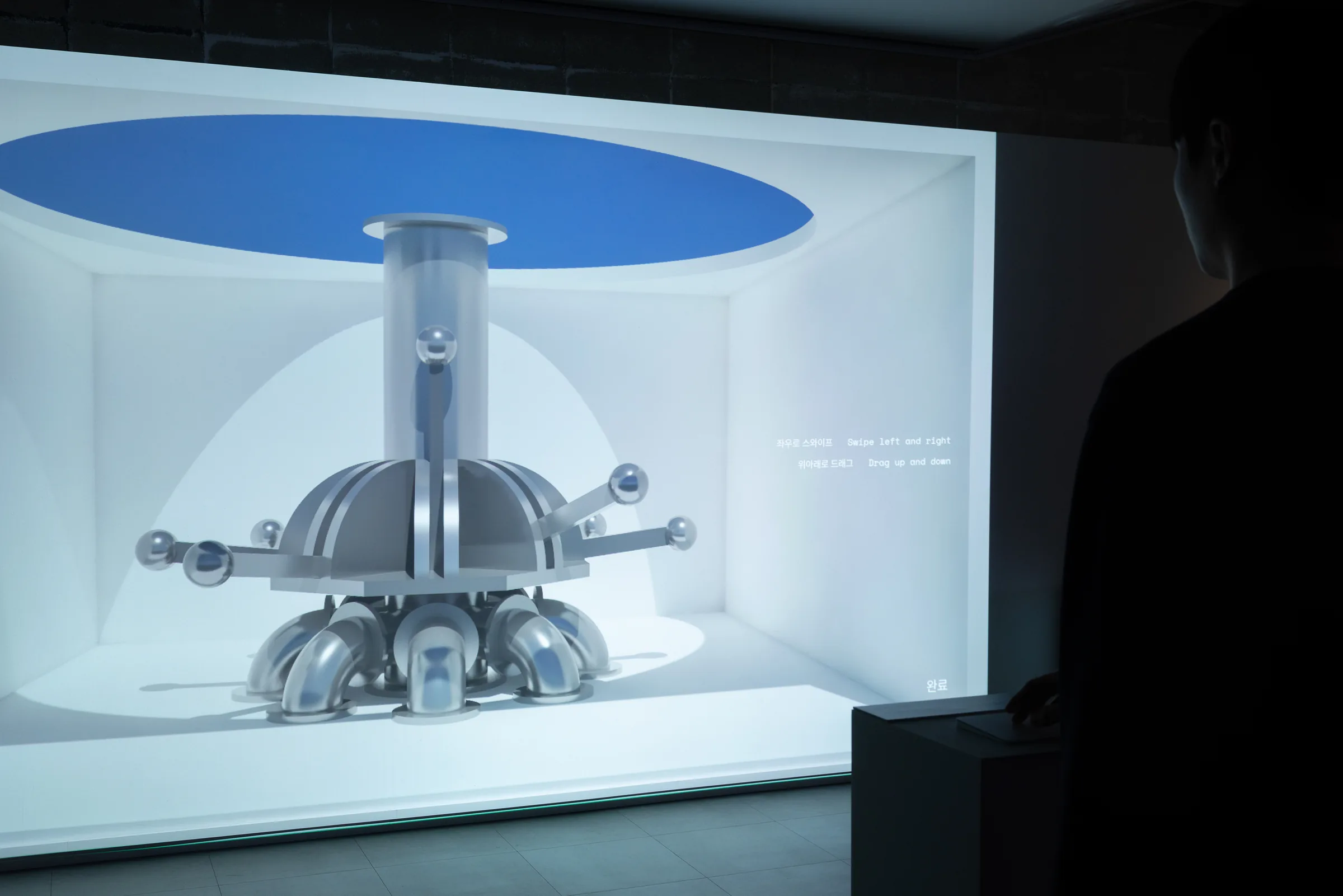
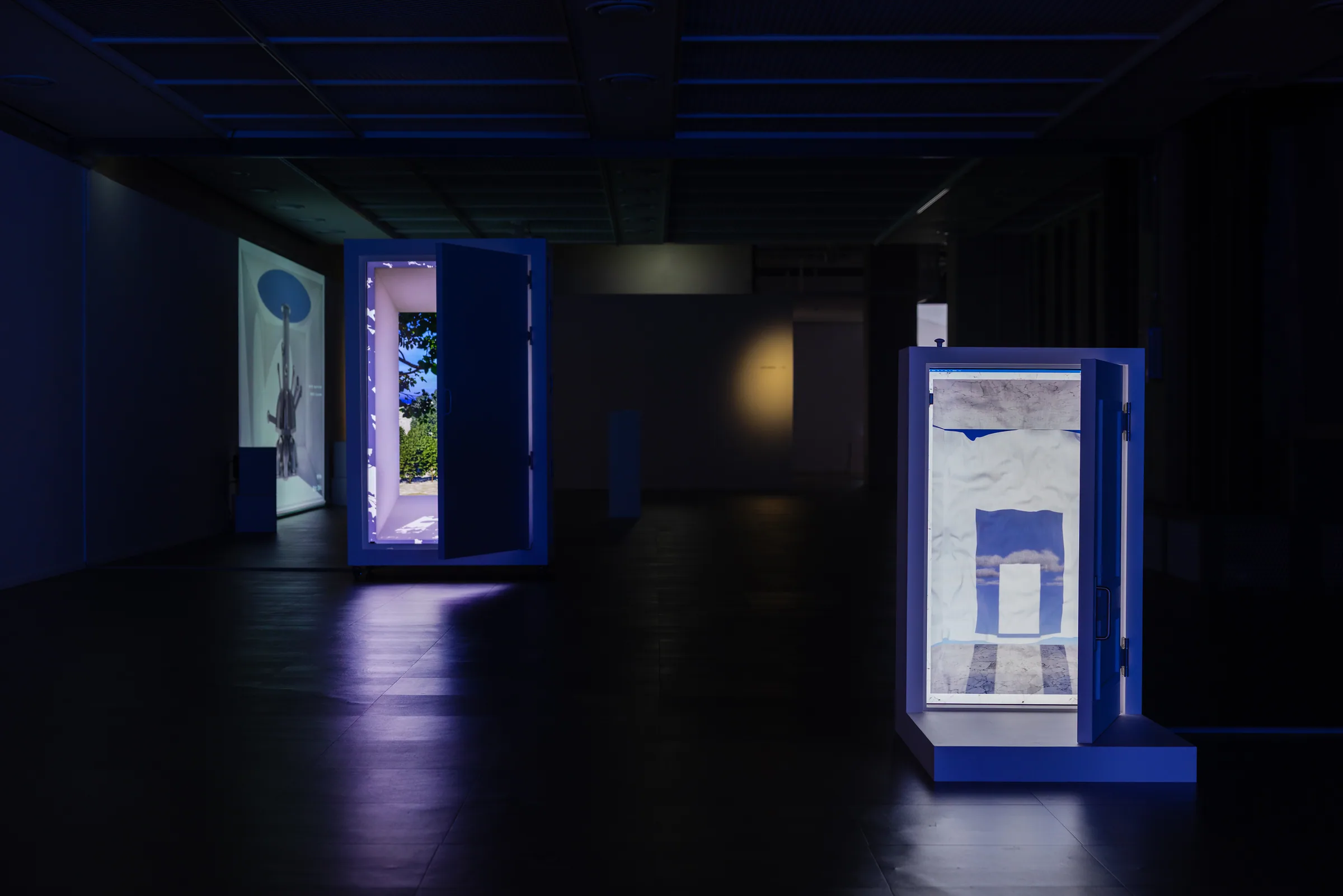
황인태의 〈Goldilocks〉(2025)와 〈Vessel〉(2026)은 인터랙티브 설치다. 〈Goldilocks〉는 7가지 기상 파라미터를 관람객이 조절해 ‘자기 날씨’를 만들고 서울 실시간 데이터와 대조하는 작업으로, 사용자 입력과 도시 데이터를 한 화면에 결합한다.
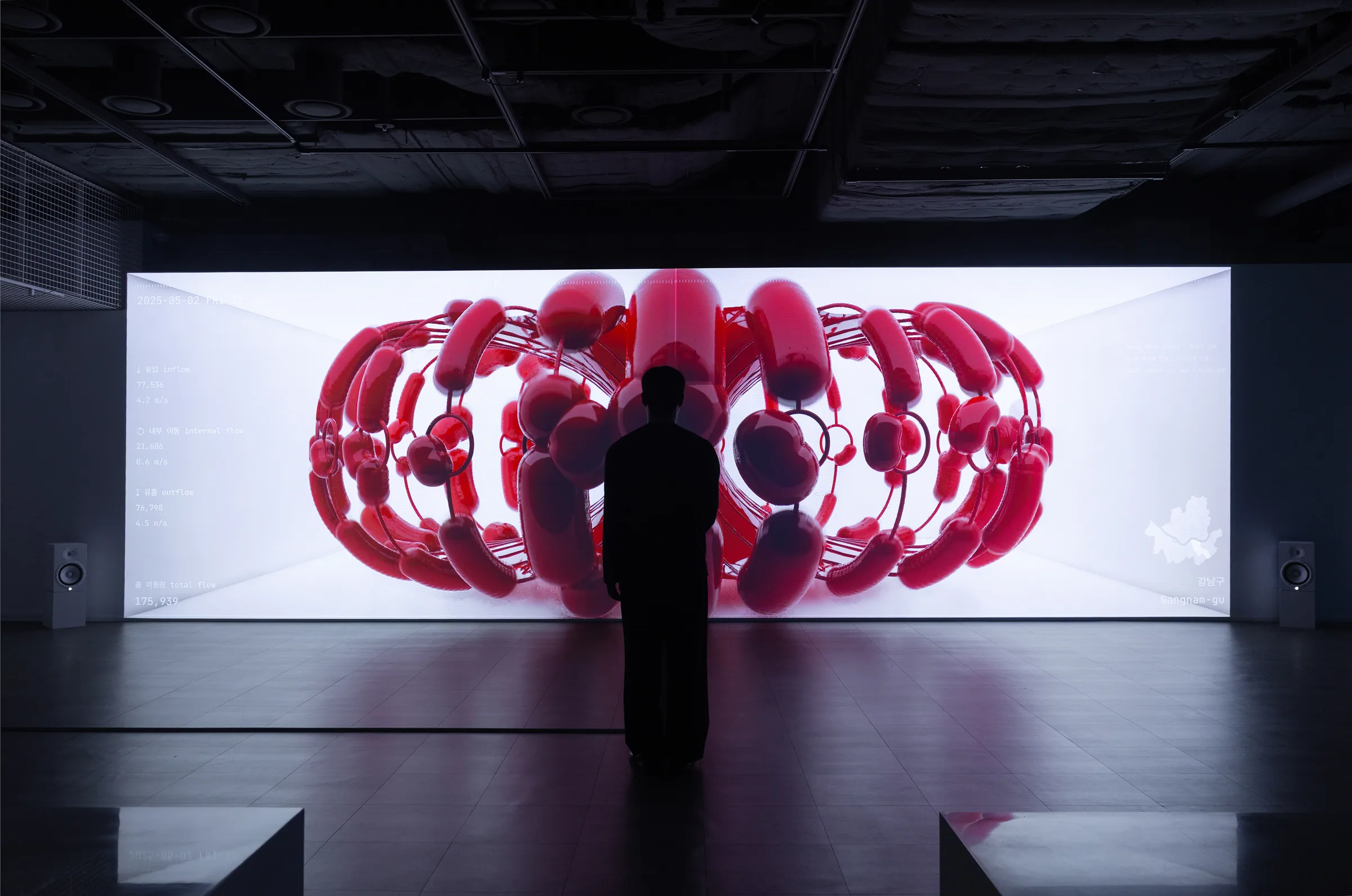
〈Vessel〉은 듀얼채널 프로젝션 + 맥박 센서 + 커스텀 소프트웨어로 구성된 작업으로, 서울시 1년치 이동 데이터를 기하학적 형태로 변환하고 관람객의 심박을 그 도시 박동과 동기화한다. 입력(맥박) → 시각 결과(데이터 박동 변화) 루프가 작품의 매체 자체다.
이 두 작품은 입력장치·센서·소프트웨어 없이는 완결되지 않는다 — 인터랙티브 아트의 정의에 정확히 들어맞는다.
생성형 AI · 다중 기기 웹아트 — 최정윤
최정윤의 〈반포자이즘〉은 AI로 생성된 아파트 이미지·사운드·텍스트·코드를 결합한 다중 기기 웹 작품이다. 관람객은 본인 핸드폰을 꺼내 스크롤하며 ‘위치(반포) × 브랜드(자이)’의 2차원 평면을 따라 이동하다가, 광고를 클릭해 정해진 경로를 벗어나는 순간 그 평면이 적분되어 미분다양체로 펼쳐진다.
기술 측면에서는 AI 아트(생성된 이미지·텍스트), 인터랙티브 아트(관람객 입력에 즉각 반응), 웹 아트(브라우저에서 작동하는 매체), 다중 기기 작품(미디어월 + 관람객 핸드폰 + PC + 어드민이 Socket.IO로 동기화되는 구조) — 네 갈래가 한 작품 안에서 겹친다.
비평 측면에서는 한국 부동산의 가치 체계를 〈플랫랜드〉의 코미디로 다루며, AI 생성 자산을 스크롤로 소비하는 시스템 자체에 대한 메타-비평을 동반한다.
왜 한 전시에서 같이 보는가
세 카테고리를 별도의 전시·매체에서 따로 보는 것보다, 한 전시 안에서 나란히 볼 때 매체 차이가 더 분명해진다. 영상의 응시, 센서의 입력, AI 생성·웹의 스크롤이 도시와 데이터라는 소재를 각각 어떻게 다루는지 비교할 수 있다.
전시는 매체 정의에 관심 있는 학생·기자·평론가에게 한 자리에서 짧은 참고가 될 수 있고, 동시에 일반 관람객에게는 ‘같은 도시를 세 가지 방식으로 다시 보는’ 경험을 제공한다.
방문 정보
- 기간 :: 2026년 5월 1일 – 6월 28일 (월–일 매일 운영)
- 시간 :: 매일 10:00 – 18:00 (입장 마감 17:45)
- 관람료 :: 무료, 예약 불필요
- 장소 :: 영등포아트스퀘어 (서울 영등포구 영중로 15 타임스퀘어 B2F, Gate 14)
- 교통 :: 1호선·KTX 영등포역 도보 3분 / 1·2호선 신도림역 도보 10분
- 준비 :: 〈반포자이즘〉 체험을 위해 본인 핸드폰 + 이어폰 권장
- 권장 관람 시간 :: 약 60–90분
전시 메인 페이지로 돌아가기
AI Art, Media Art, Interactive Art — A Single Exhibition with All Three (Living Geometry 2026)
‘AI art’, ‘media art’, and ‘interactive art’ are often grouped together, but they are three distinct lineages. A 2026 exhibition in Seoul places all three side by side: KAIST XD Lab's Living Geometry 2026 at YDP Artsquare in Yeongdeungpo brings three single-channel video works, three sensor-driven interactive installations, and one multi-device generative-AI web work into one room.
Short definitions
Media art is the broader contemporary category that takes technical media — video, sound, light — as its main expressive material. Single- and multi-channel video, media-wall projection, sound installation all sit here.
Interactive art names work whose outcome depends on a visitor's body or input — sensors, cameras, web, controllers connect visitor and work into a single system. The category took shape alongside interaction design and HCI research from the 1990s on.
AI art (often generative AI art) uses machine-learning or generative models as medium or collaborator. The artist shapes the generation process itself, sometimes critically. The field has expanded quickly since the early 2020s.
The three are not exclusive — one work can be media art, interactive, and AI-based at once. Living Geometry 2026 is arranged so the overlaps can be observed in one visit.
Single-channel video media art — Yiyun Kang and Minhyeok Seo
Yiyun Kang's Vanishing 2.0 (2025) and Technosphere (2026), and Minhyeok Seo's Post-Vanishing (2026), are single-channel videos approaching the Anthropocene, the technosphere, and the post-human city. Each runs 2–4 minutes with sound, in the traditional video lineage of media art.
Vanishing 2.0 is a sequel to Vanishing, first shown on the large outdoor screen at COEX in Seoul. Technosphere visualises humanity's artificial sphere as an algorithmic geological stratum.
These three works rely on attention rather than input — squarely within the contemplative video lineage of media art.
Sensor-driven interactive art — Intae Hwang
Intae Hwang's Goldilocks (2025) and Vessel (2026) are interactive installations. Goldilocks lets a visitor adjust seven weather parameters and compare the result with Seoul's live data — visitor input and city data combine inside one screen.
Vessel uses dual-channel projection, a pulse sensor, and custom software. A year of Seoul's mobility data is translated into geometric form, and the visitor's pulse synchronises with the city's rhythm. The input-to-visual loop is the medium itself.
Both works require sensors and software to complete — interactive art in the strict sense.
Generative AI · multi-device web art — Jeanyoon Choi
Jeanyoon Choi's Banpo-Xism fuses AI-generated apartments, sound, text, and code into a multi-device web work. Visitors scroll on their own phones through a 2D plane of location (Banpo) and brand (Xi); tapping an advertisement integrates the plane outward into a differentiable manifold.
Technically the work overlaps four lineages — AI art (generated images and text), interactive art (real-time visitor input), web art (the browser as medium), and multi-device work (media wall + N visitor phones + PCs + admin synchronised over Socket.IO).
Critically, it reads the Korean real-estate value system through a Flatland metaphor, doubling as a meta-critique of systems that ask people to scroll through AI-generated assets.
Why see them together
Encountering the three lineages in separate shows is one thing; placing them under one curatorial premise — the city as a living organism — sharpens the medium differences. Attention to a video, input to a sensor, and a scroll on a web page render the same material (urban data) in different forms.
For students, journalists, and critics, the show is a brief one-room reference; for general visitors, it offers the same city read three ways.
Visit
- Dates :: May 1 – Jun 28, 2026 (daily)
- Hours :: Daily 10:00 – 18:00 (last entry 17:45)
- Admission :: Free, no reservation
- Venue :: YDP Artsquare (Times Square B2F, 15 Yeongjung-ro, Yeongdeungpo-gu, Seoul · Gate 14)
- Transit :: 3-min walk from Yeongdeungpo Station (Line 1 / KTX)
- Bring :: A phone + earbuds (recommended) for Banpo-Xism
- Suggested duration :: ~60–90 min
Back to exhibition main page