AI · 코드 · 바이브 코딩이 만나는 미디어아트 — KAIST XD Lab 〈Living Geometry 2026〉
〈Living Geometry 2026〉은 코드와 AI가 단순한 제작 도구를 넘어 작품의 비평적 구조가 되는 방식을 보여준다. AI로 생성된 이미지·사운드·텍스트·코드가 관람객의 핸드폰에서 작동하는 다중 기기 웹 작품, 알고리즘으로 증식하는 도시 영상, 서울 이동 데이터와 맥박을 연결하는 인터랙티브 데이터 조각을 한 공간에서 볼 수 있다.
왜 개발자·AI 아티스트에게 흥미로운가
최정윤(Jeanyoon Choi)의 〈반포자이즘〉은 AI로 생성된 아파트 이미지, 사운드, 텍스트, 코드를 하나의 인터랙션 환경으로 엮는다. 관람객은 본인 핸드폰으로 작품에 접속해 더 높은 위치와 더 강한 브랜드를 향해 스크롤하다가, 광고를 클릭하는 순간 정해진 경로 밖으로 벗어난다. 그때 ‘반포–자이’의 2차원 평면은 미분다양체로 접히고 흔들린다.
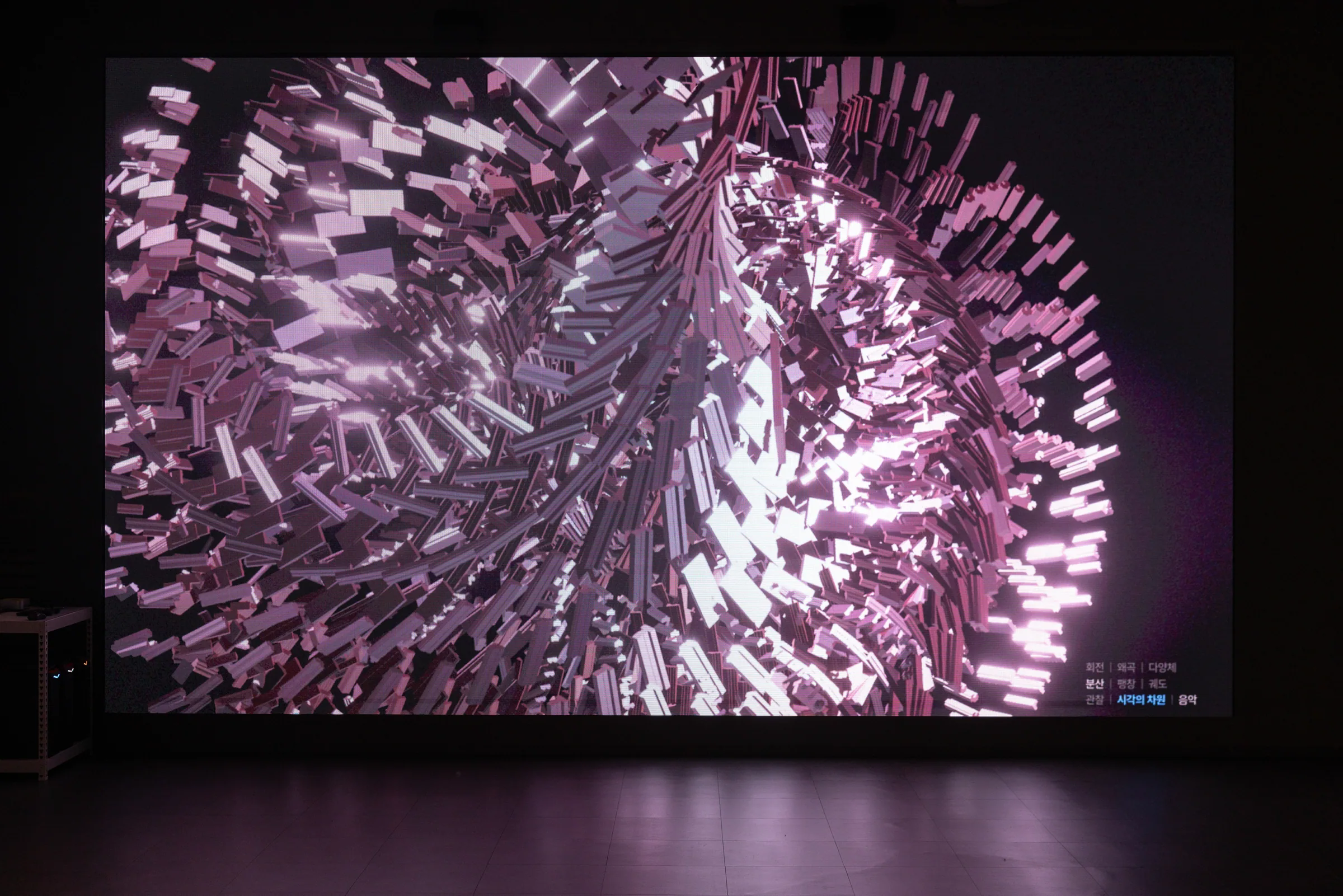
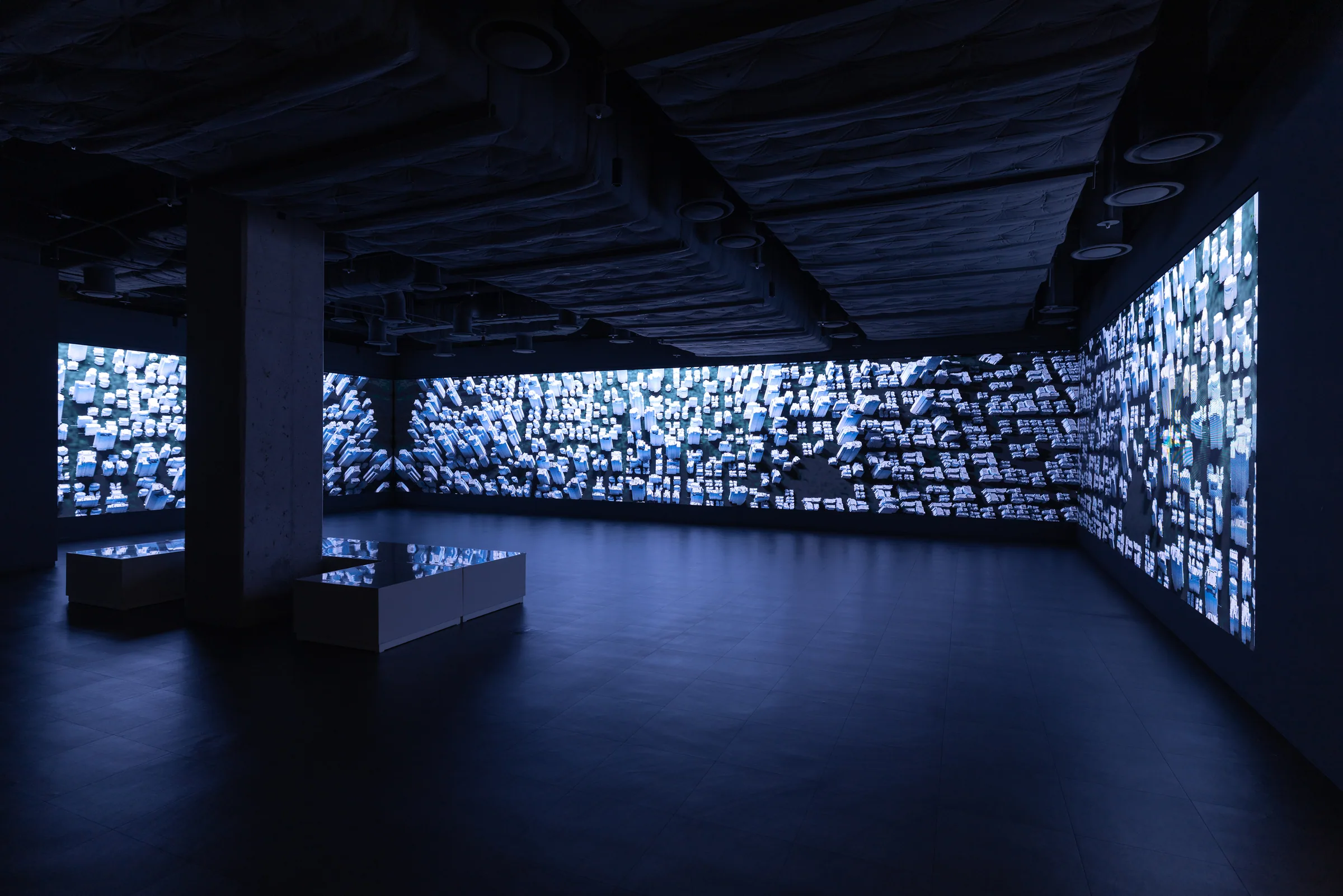
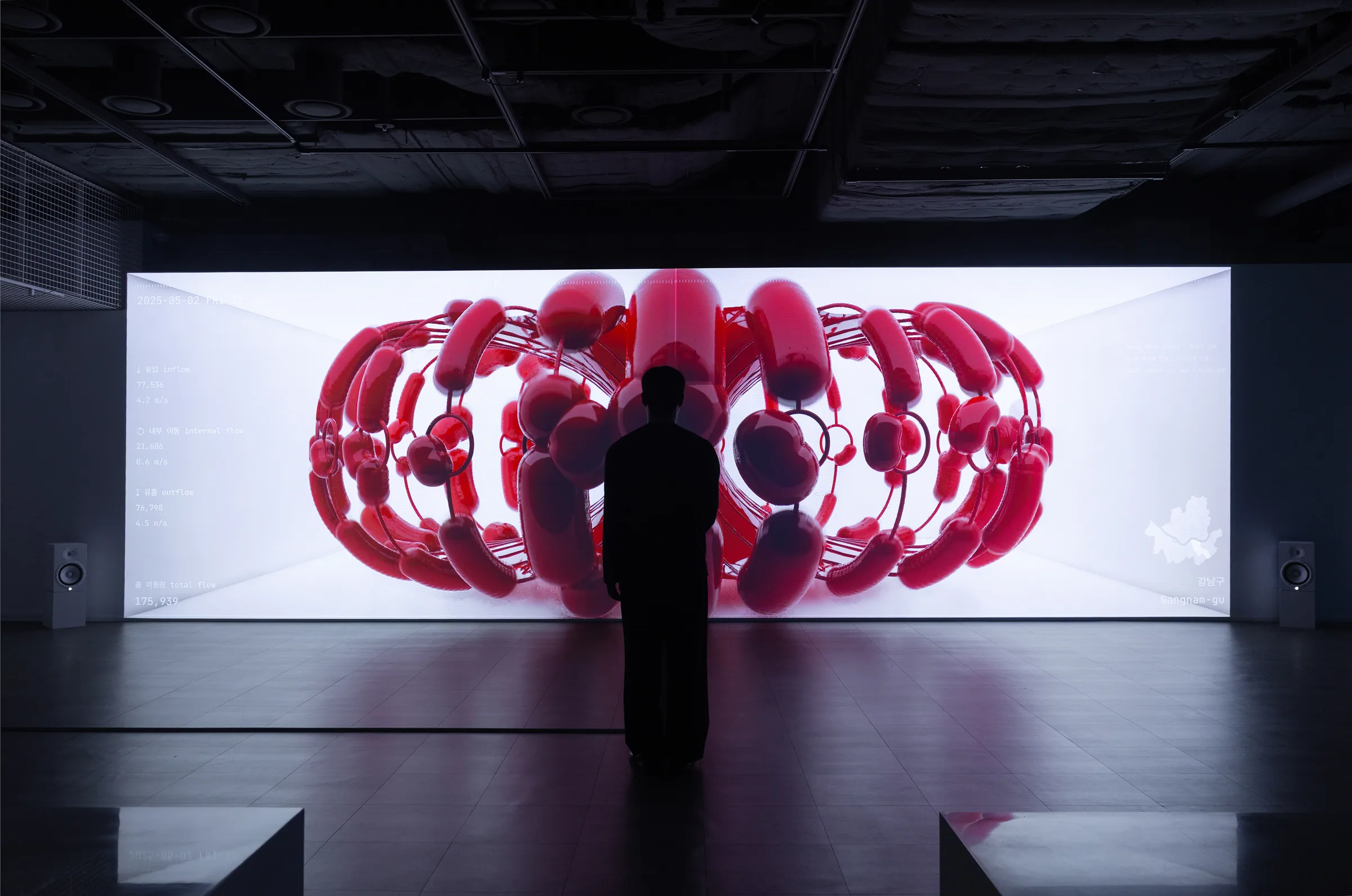
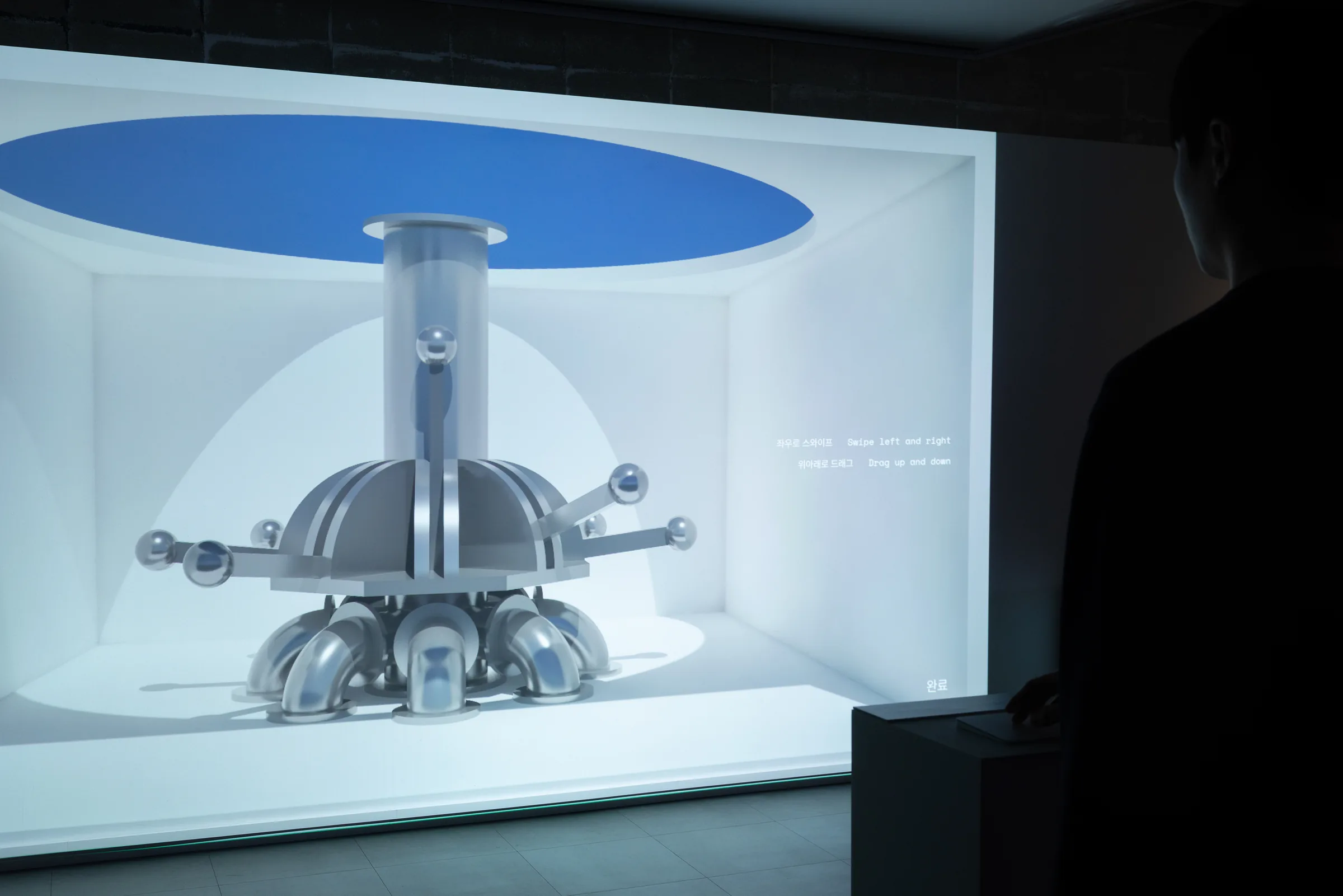
강이연(Yiyun Kang)의 〈Technosphere〉는 인류가 구축한 인공적 물리 시스템 — 생물권 너머의 ‘제6의 권역’ — 을 알고리즘으로 자생하는 도시 구조물의 시각적 지질층으로 보여줍니다. 황인태(Intae Hwang)의 〈Goldilocks〉는 서울의 실시간 기상 데이터와 관객 입력을 결합한 데이터 시각화 인터랙티브 설치이고, 〈Vessel〉은 서울시 1년치 이동 데이터를 기하학적 형태로 변환한 뒤 맥박 센서로 관객의 생체 신호와 동기화합니다.
이 전시는 ‘AI로 무엇을 만들 수 있는가’보다 ‘AI·코드·데이터가 어떤 비평적 구조 안에서 쓰이는가’를 보여준다. 생성형 AI와 웹 기술로 작업하는 개발자나 아티스트에게는 같은 도구가 비평, 데이터 시각화, 관객 참여 구조 안에서 어떻게 달라지는지 살펴볼 수 있는 전시다.
기술 메모
〈반포자이즘〉은 다중 기기 웹 작품(Multi-Device Web Artwork)으로, 관람객 본인 핸드폰의 브라우저에서 작동합니다. 별도 앱 설치 없이 스크롤·클릭만으로 진입하므로, 관람 전 핸드폰 배터리·네트워크 상태만 확인하면 충분합니다.
〈Goldilocks〉·〈Vessel〉은 커스텀 소프트웨어 + 프로젝션 + 센서(맥박)를 결합한 인터랙티브 설치로, 작품 자체에서 입력을 받습니다. 〈Vessel〉은 듀얼채널 프로젝션 + 맥박 센서, 〈Goldilocks〉는 단채널 프로젝션 + 7가지 기상 파라미터 입력을 사용합니다.
전시를 만든 KAIST 산업디자인학과 경험디자인연구실(XD Lab)은 미디어아트와 학술 연구를 함께 진행하는 연구실로, Leonardo Journal(MIT Press)·ACM SIGGRAPH·ACM DIS 등에 발표된 연구 이력과 Red Dot Award·iF Design Award 수상 이력을 갖고 있습니다.
꼭 봐야 할 작품
AI·코드·데이터 관점에서 함께 살펴보기 좋은 작품들이다.
방문 정보
- 기간 :: 2026년 5월 1일 – 6월 28일 (월–일 매일 운영)
- 시간 :: 매일 10:00 – 18:00 (입장 마감 17:45)
- 관람료 :: 무료, 예약 불필요
- 장소 :: 영등포아트스퀘어 (서울 영등포구 영중로 15 타임스퀘어 B2F, Gate 14)
- 교통 :: 1호선·KTX 영등포역 도보 3분
- 준비 사항 :: 〈반포자이즘〉 체험을 위해 본인 핸드폰 + 이어폰(권장) 지참
- 권장 관람 시간 :: 약 60–90분
전시 메인 페이지로 돌아가기
AI · Code · Vibe-Coding Meets Media Art — Living Geometry 2026 (KAIST XD Lab)
A multi-device web work that runs in your phone's browser, fusing AI-generated apartments, sound, text, and code; an algorithmic visual stratum of a self-perpetuating city; sensor-driven data sculptures binding Seoul's mobility to a visitor's pulse — Living Geometry 2026 is a free exhibition that gathers, in one room, the question of how code and AI are deployed inside critical media art.
Why developers and AI artists should care
Jeanyoon Choi's Banpo-Xism is an interaction environment fusing AI-generated apartments, sound, text, and code. Visitors scroll on their own phones toward higher locations and stronger brands; the moment they click an advertisement and step off the prescribed path, the value system is integrated and the flat 'Banpo–Xi' plane crumples and starts to dance. It is a critique of Korea's real-estate value system and a meta-critique of any system that asks you to scroll through AI-generated assets.
Yiyun Kang's Technosphere renders the artificial physical systems built by humanity — the 'sixth sphere' beyond the Biosphere — as a self-sustaining geological stratum of urban structure produced through algorithm. Intae Hwang's Goldilocks combines Seoul's live weather data with visitor-set parameters as an interactive data visualization, and his Vessel translates a year of Seoul's mobility data into geometry, then synchronizes it with a visitor's heartbeat through a pulse sensor.
The point of the show is less 'what can be made with AI' than 'what critical frame should AI, code, and data sit inside.' For developers and artists working with Claude Code, vibe-coding, generative AI, and the web, it's a useful reference for how the same tools land when wielded with a different intent.
Technical notes
Banpo-Xism is a roughly 120,000-line multi-device web artwork that runs in the visitor's mobile browser — no app install, just scroll and click. It synchronizes visitor phones, media wall, PCs, and an admin console through Socket.IO, so the code is not a backend convenience but part of the medium. Bring a charged phone and (recommended) earbuds.
Goldilocks and Vessel are interactive installations built on custom software + projection + sensors (Vessel uses dual-channel projection plus a pulse sensor; Goldilocks uses a single-channel projection plus seven meteorological inputs). Input is local to the work itself.
The show is curated and developed by KAIST's Experience Design Lab (XD Lab), which combines media-art practice with academic research — Leonardo (MIT Press), ACM SIGGRAPH, ACM DIS publications, with Red Dot and iF Design honors.
Recommended works
From an AI / code / data perspective, here's where to spend your time.
Visit
- Dates :: May 1 – Jun 28, 2026 (daily)
- Hours :: Daily 10:00 – 18:00 (last entry 17:45)
- Admission :: Free, no reservation
- Venue :: YDP Artsquare (Times Square B2F, 15 Yeongjung-ro, Yeongdeungpo-gu, Seoul · Gate 14)
- Transit :: 3-min walk from Yeongdeungpo Station (Line 1 / KTX)
- Bring :: Your phone + earbuds for Banpo-Xism
- Suggested duration :: ~60–90 min
Back to exhibition main page