Banpo-Xism
2026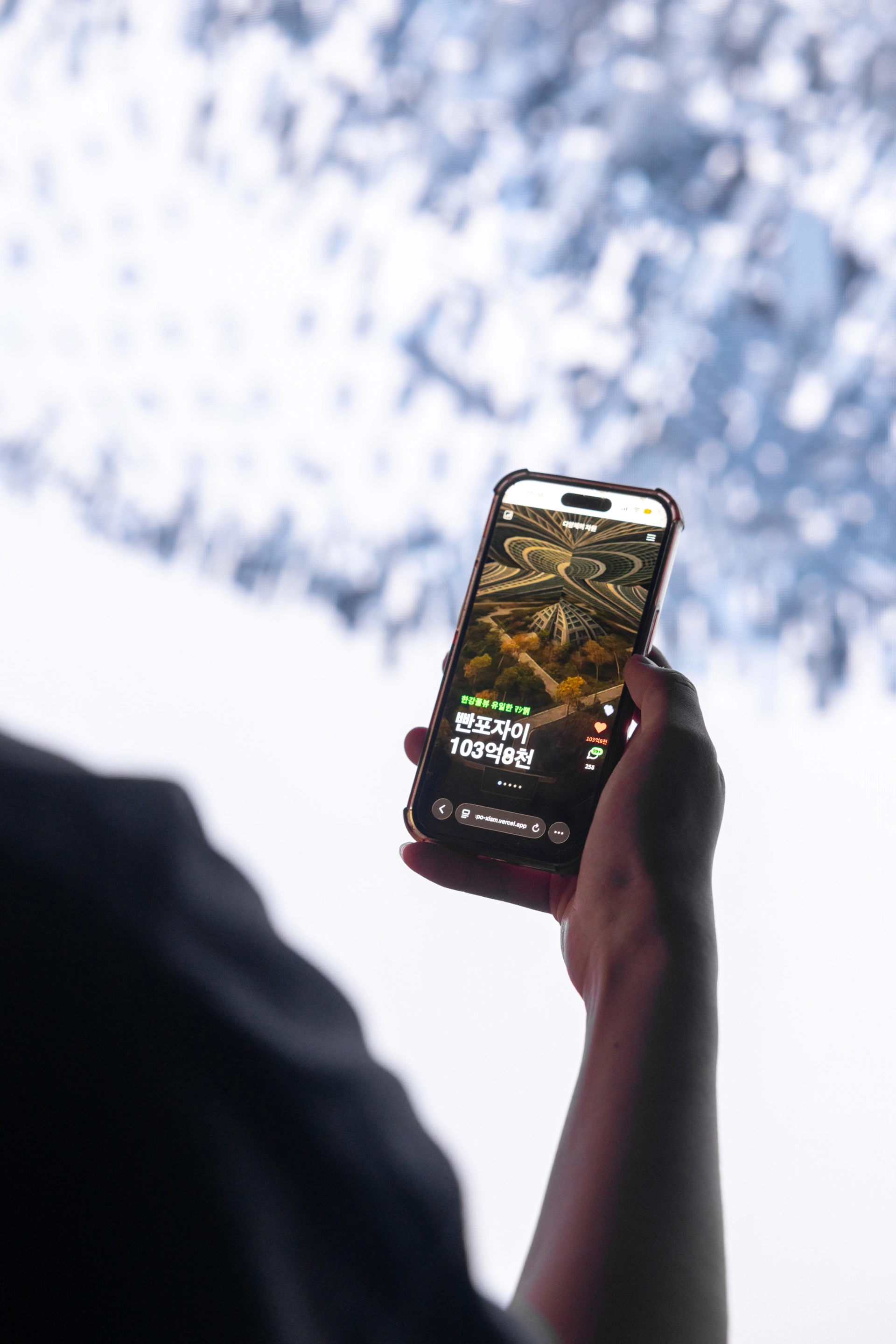
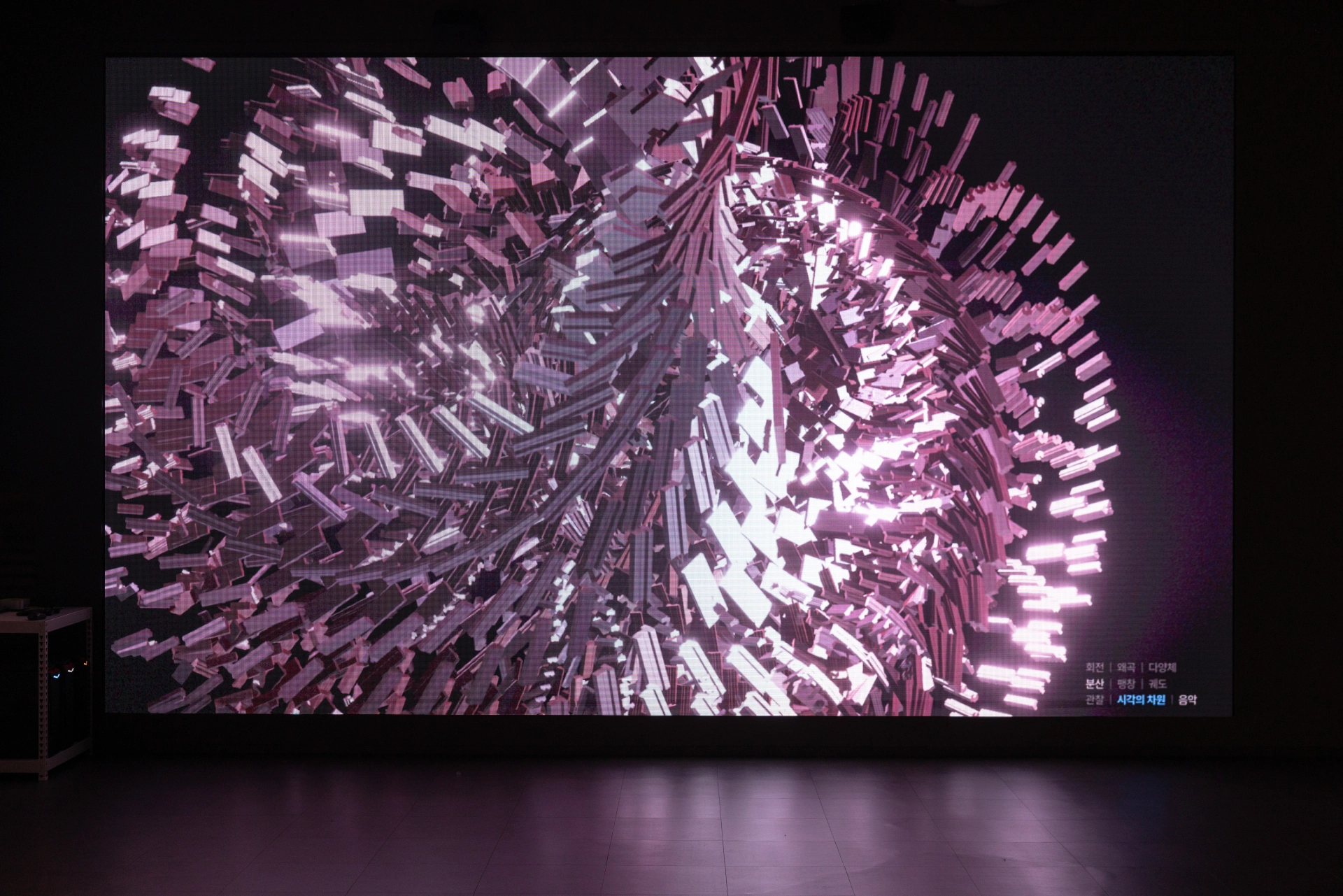
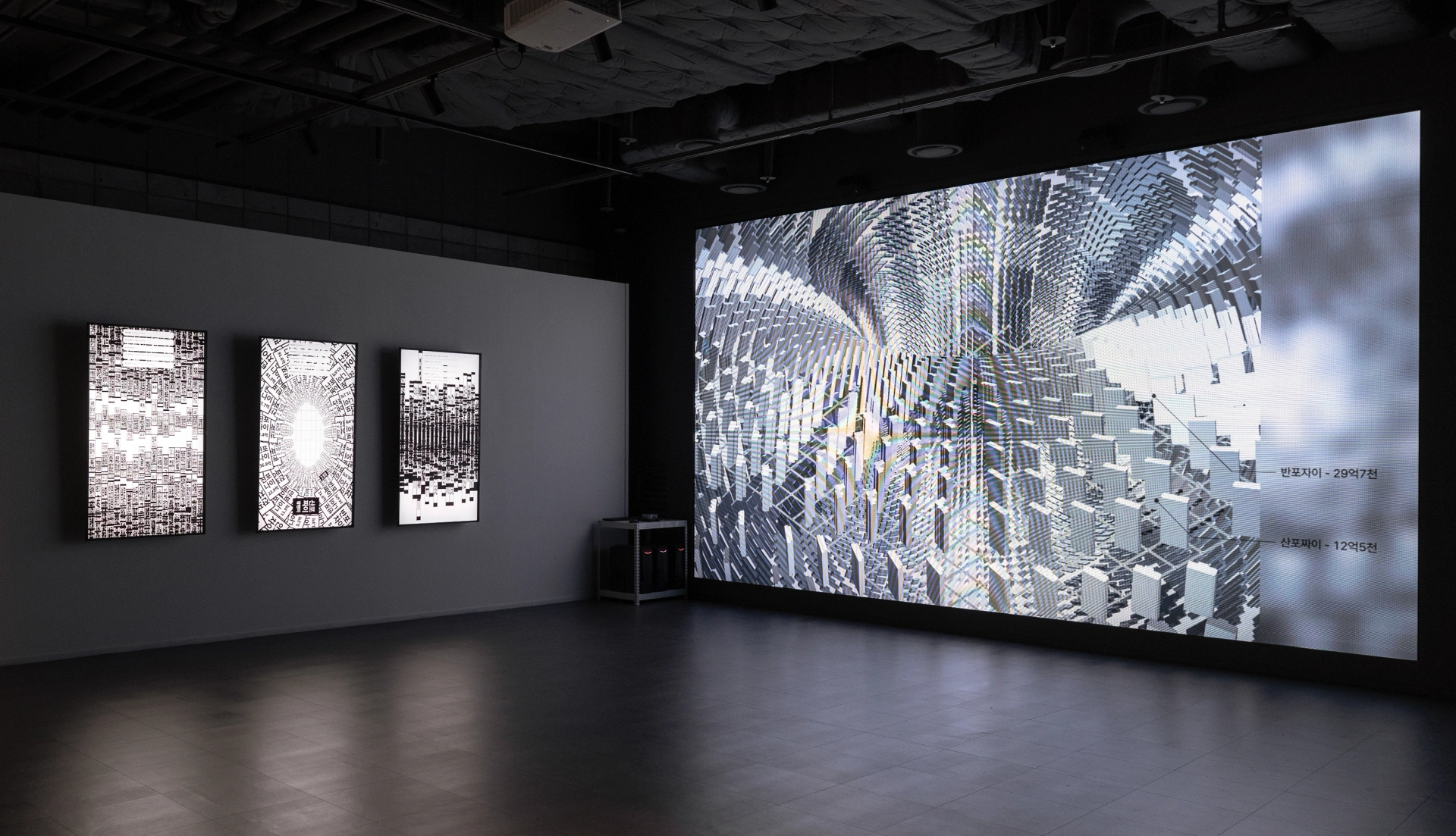
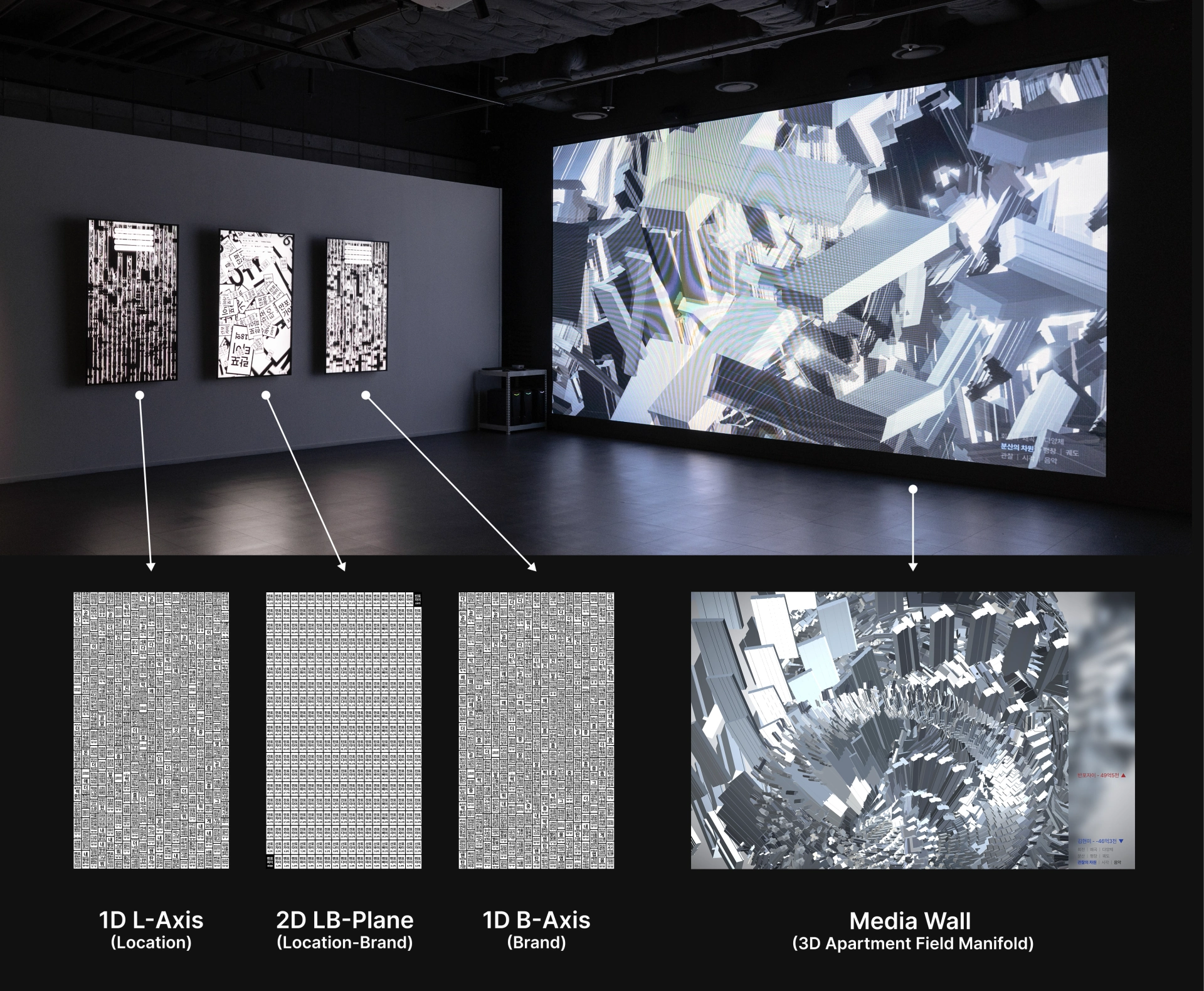
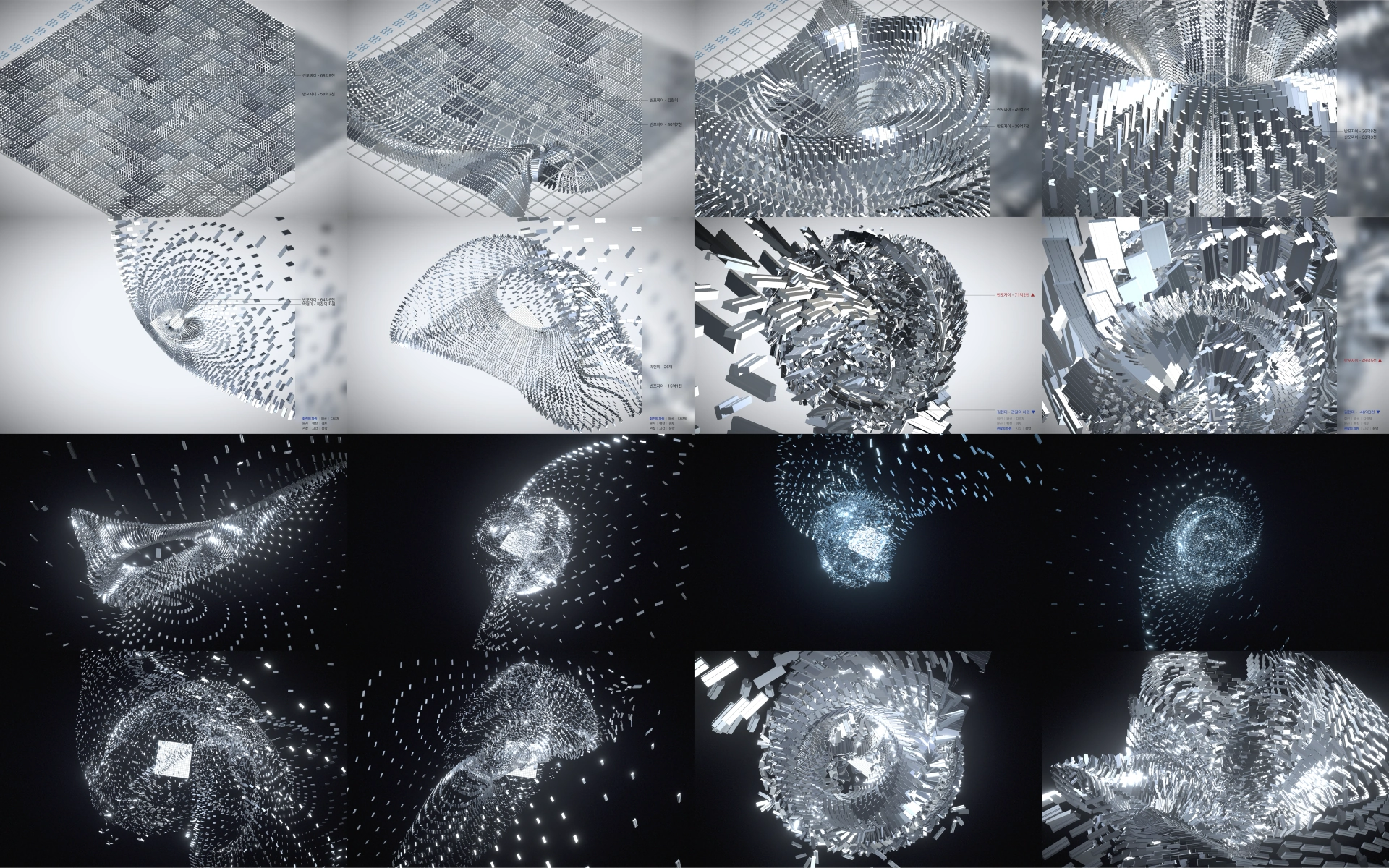
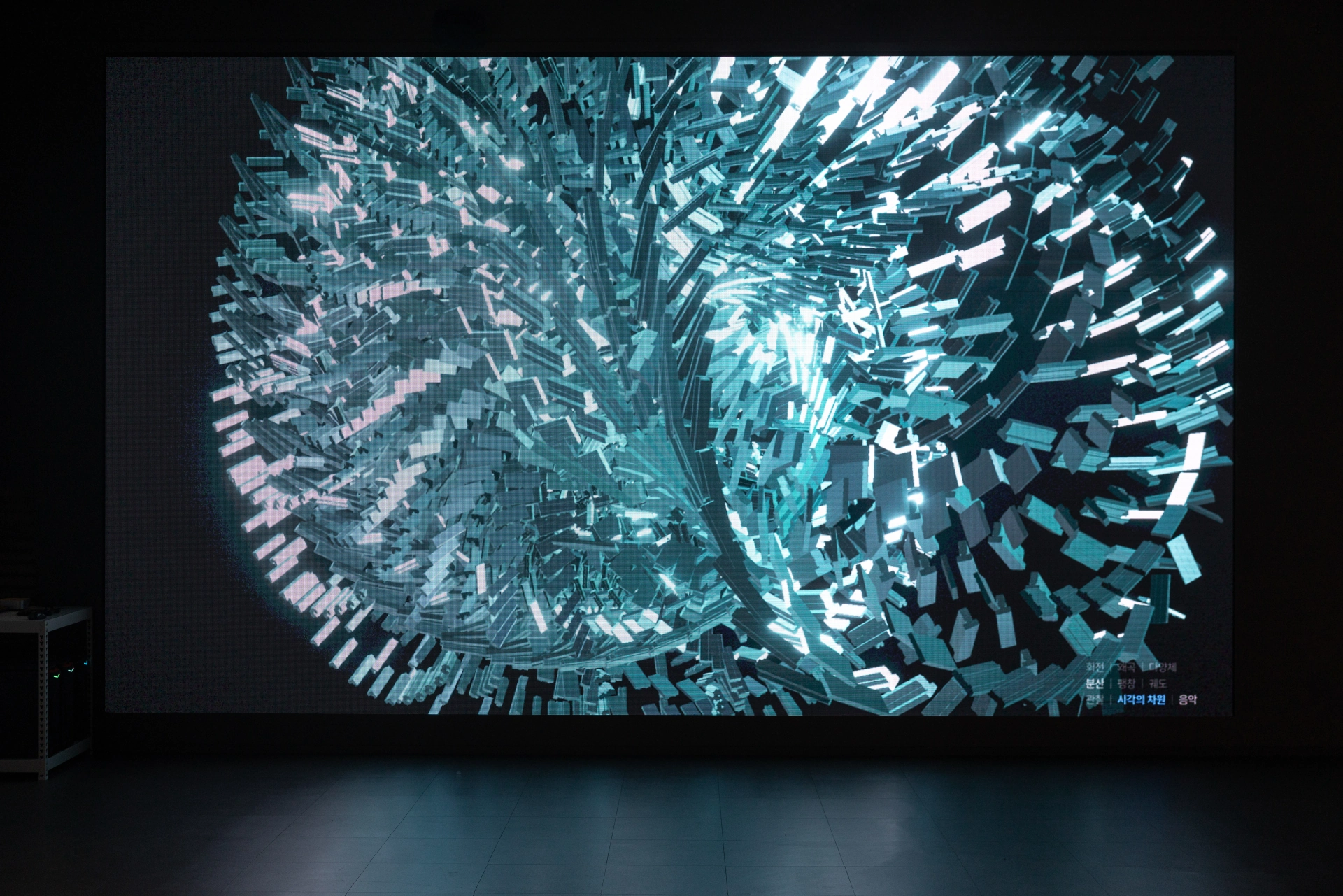
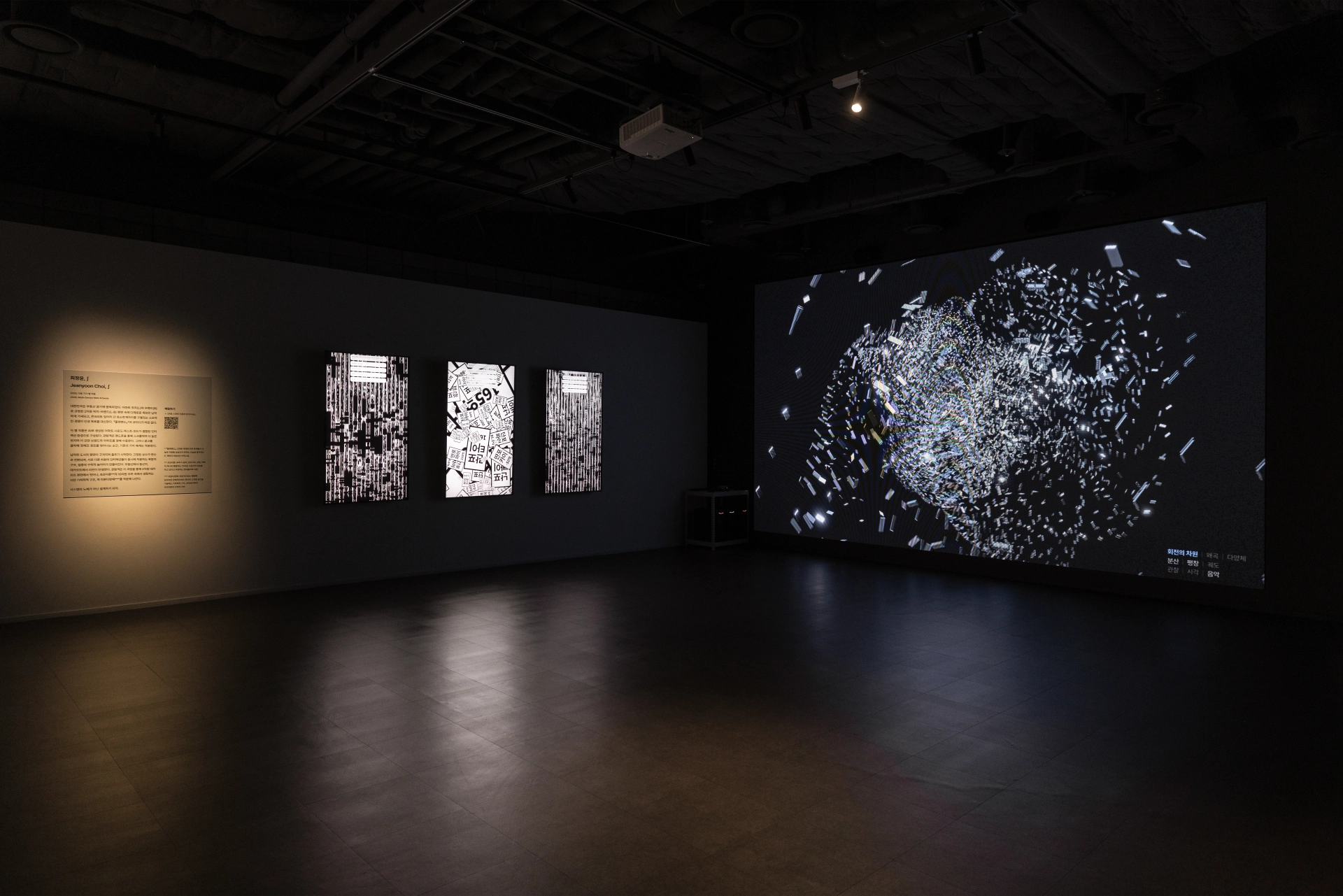
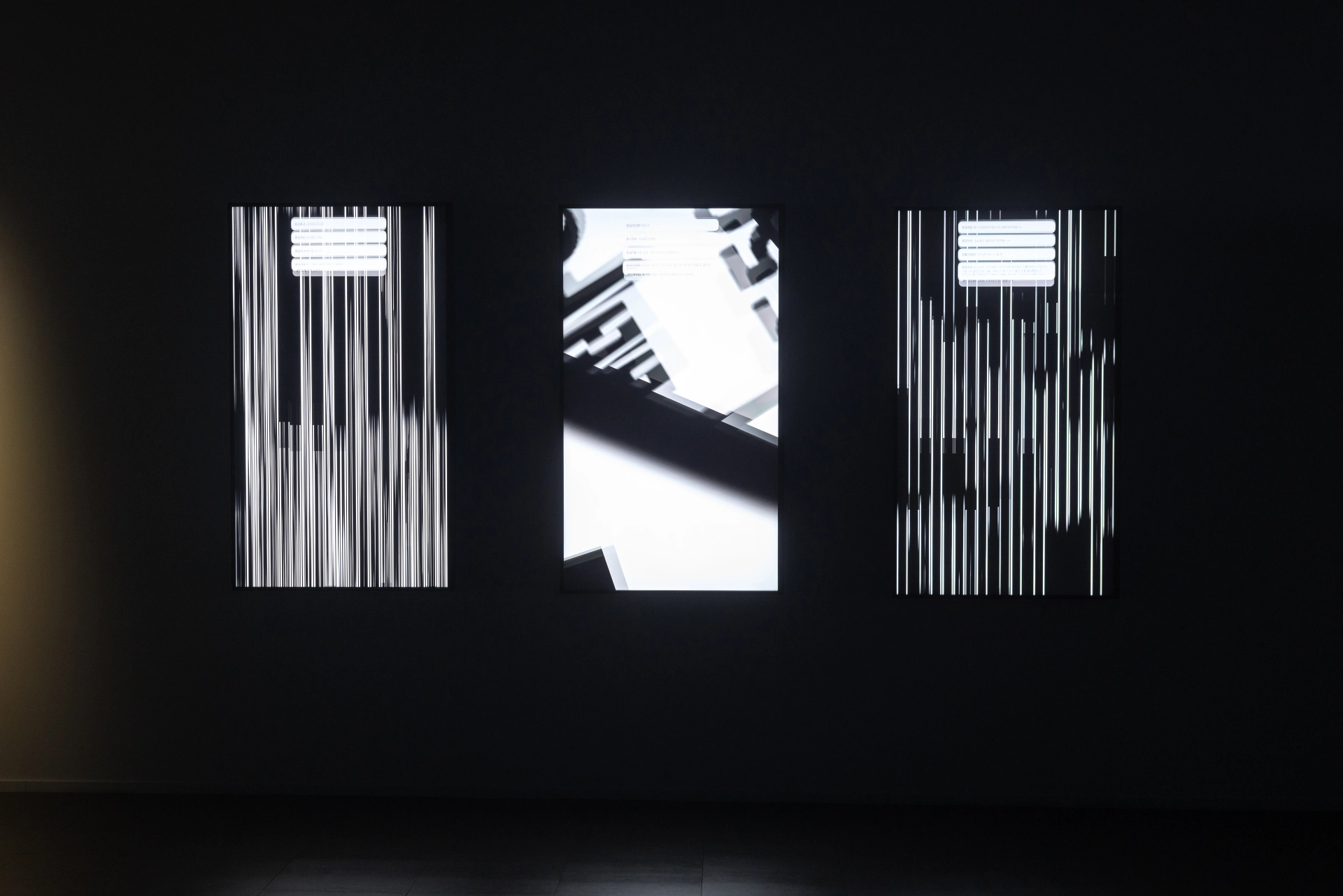
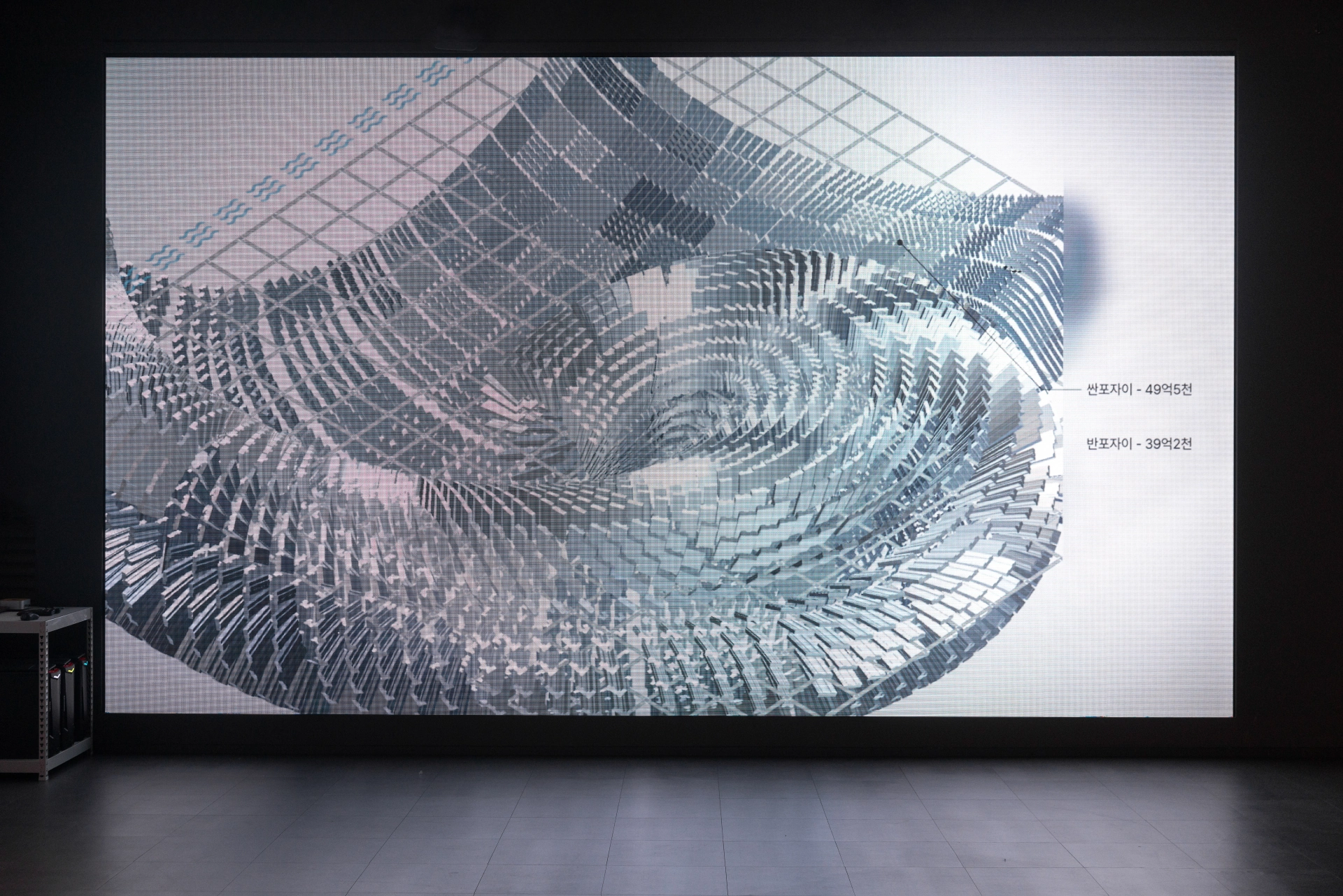
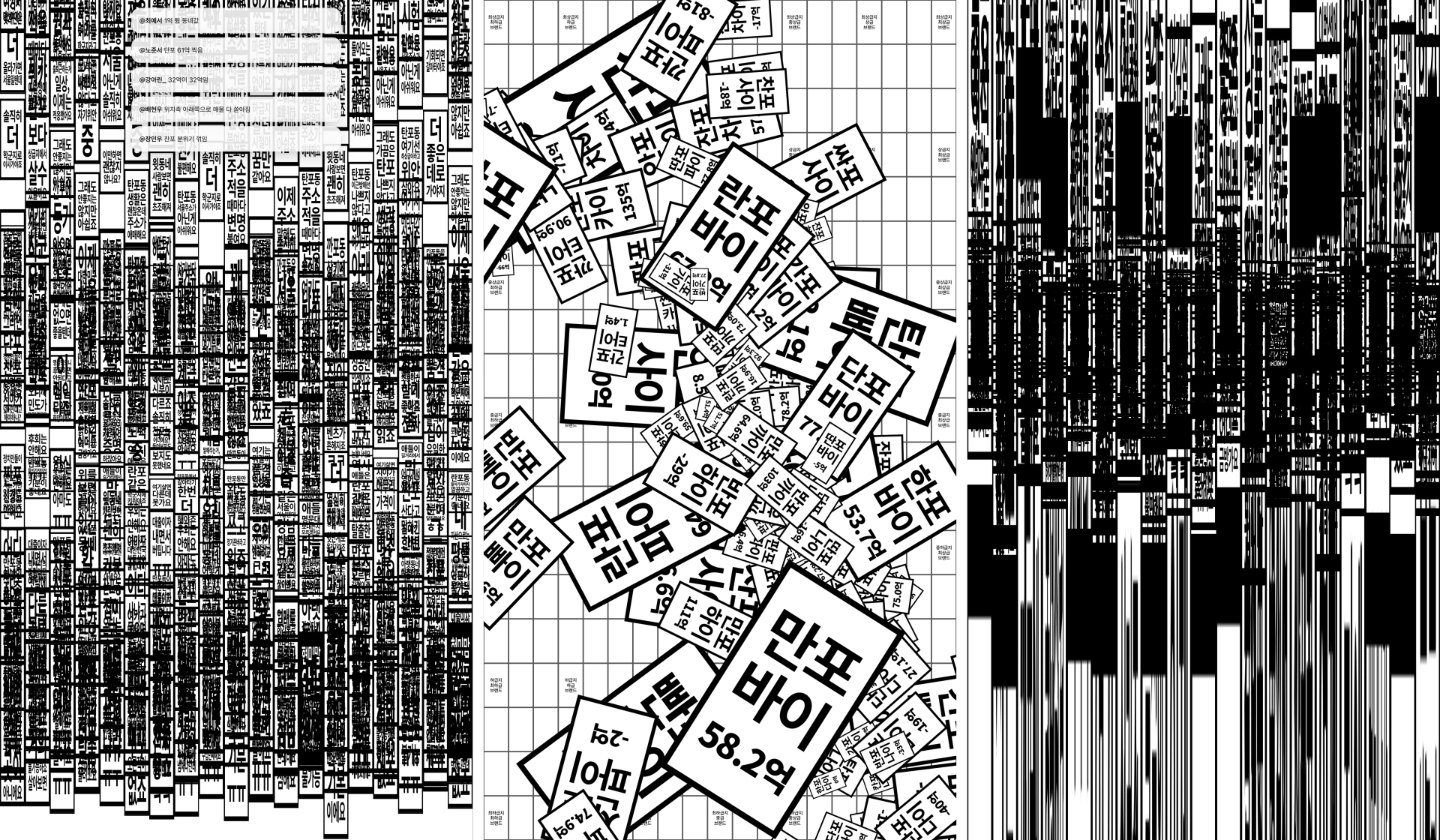
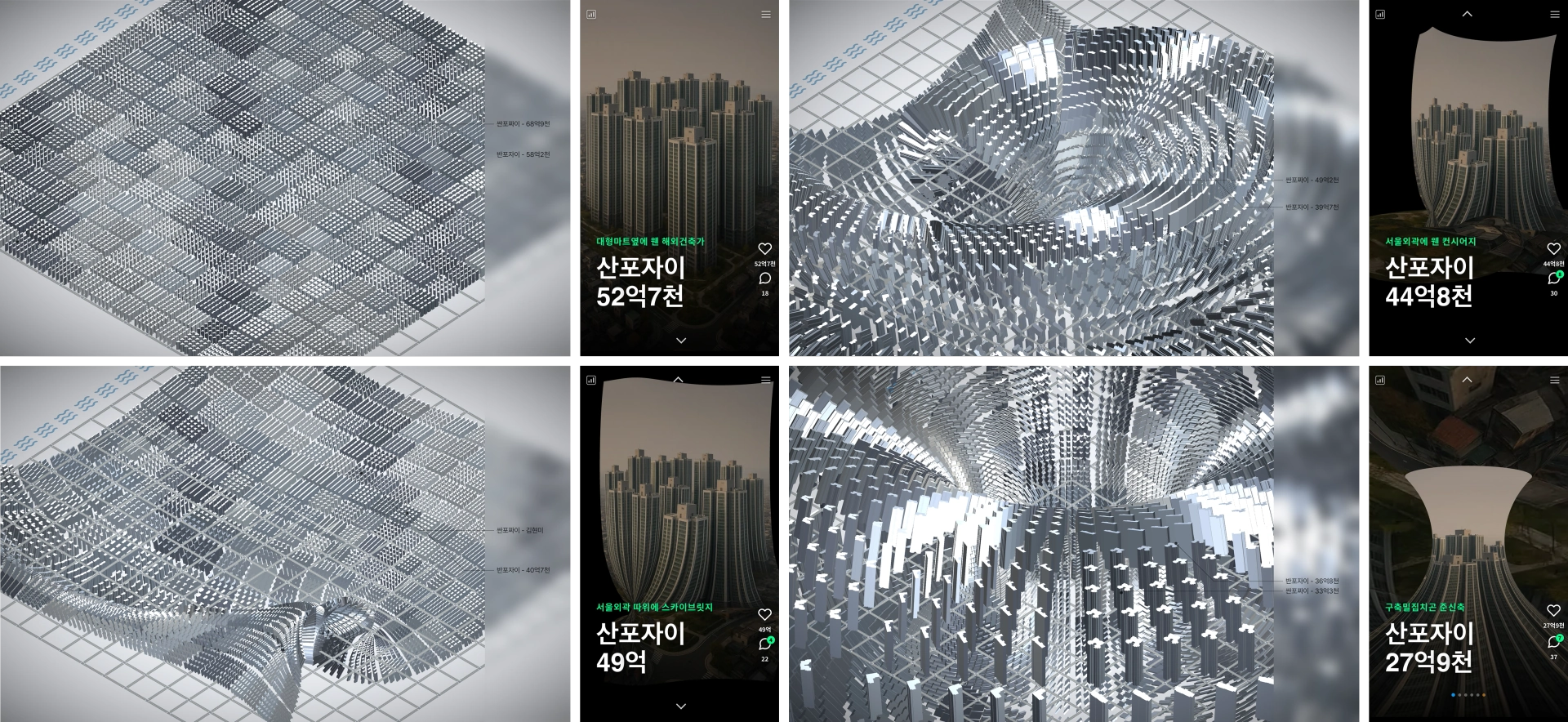
<Banpo-Xism> (반포자이즘) addresses South Korea’s apartment culture as a contemporary myth in which location and brand operate as coordinates of wealth, status, and aspiration. The work translates this myth into a multi-device web artwork in which audience mobile phones are synchronized with surrounding screens. Audiences first scroll through an SNS-like feed of fictional apartment complexes arranged by location and brand. Each scroll updates the surrounding screens as a step toward higher coordinates, while remaining confined to a flat apartment plane. Later, mobile interactions collectively deform this field into higher-dimensional geometric forms, shifting coordinates, prices, and textual hierarchies across the installation. Thus, <Banpo-Xism> makes social myth visible as a coordinate system audiences enter, perform, and destabilize.
The Republic of Korea is the “Republic of Apartments” (Valérie Gelézeau). With 53.9% of households living in apartments, apartments are no longer simply housing; they are objects of aspiration, speculation, and fetishised value. Complexes such as Banpo-Xi and Apgujeong-Hyundai, worth up to KRW 10 billion (USD 7 million), are symbols of status and aspiration. This post-consumerist obsession with prime districts (Banpo, Apgujeong) and apartment brands (Xi, Hyundai) recalls Baudrillard’s minimum marginal difference: tiny distinctions within a standardised concrete city, where what an apartment’s location-brand signifies matters more than the apartment itself.
Banpo-Xism (반포자이즘), a term coined by the artists, names this contemporary Korean social thread: a blind, zero-sum competition toward the same idealised real-estate coordinate of location (L) and brand (B). Within this L-B plane, people compare, compete, and pursue higher coordinates. This recalls Abbott’s satirical novella <Flatland>, in which two-dimensional beings mistake their plane for reality, unable to imagine dimensions beyond it. From a higher-dimensional view, however, Flatland’s laws appear narrow, arbitrary, and almost absurd. <Banpo-Xism> experiments with a similar proposition: Banpo-Xi, the apparent ultimate coordinate of success, may be only a flattened projection of a larger higher-dimensional field.
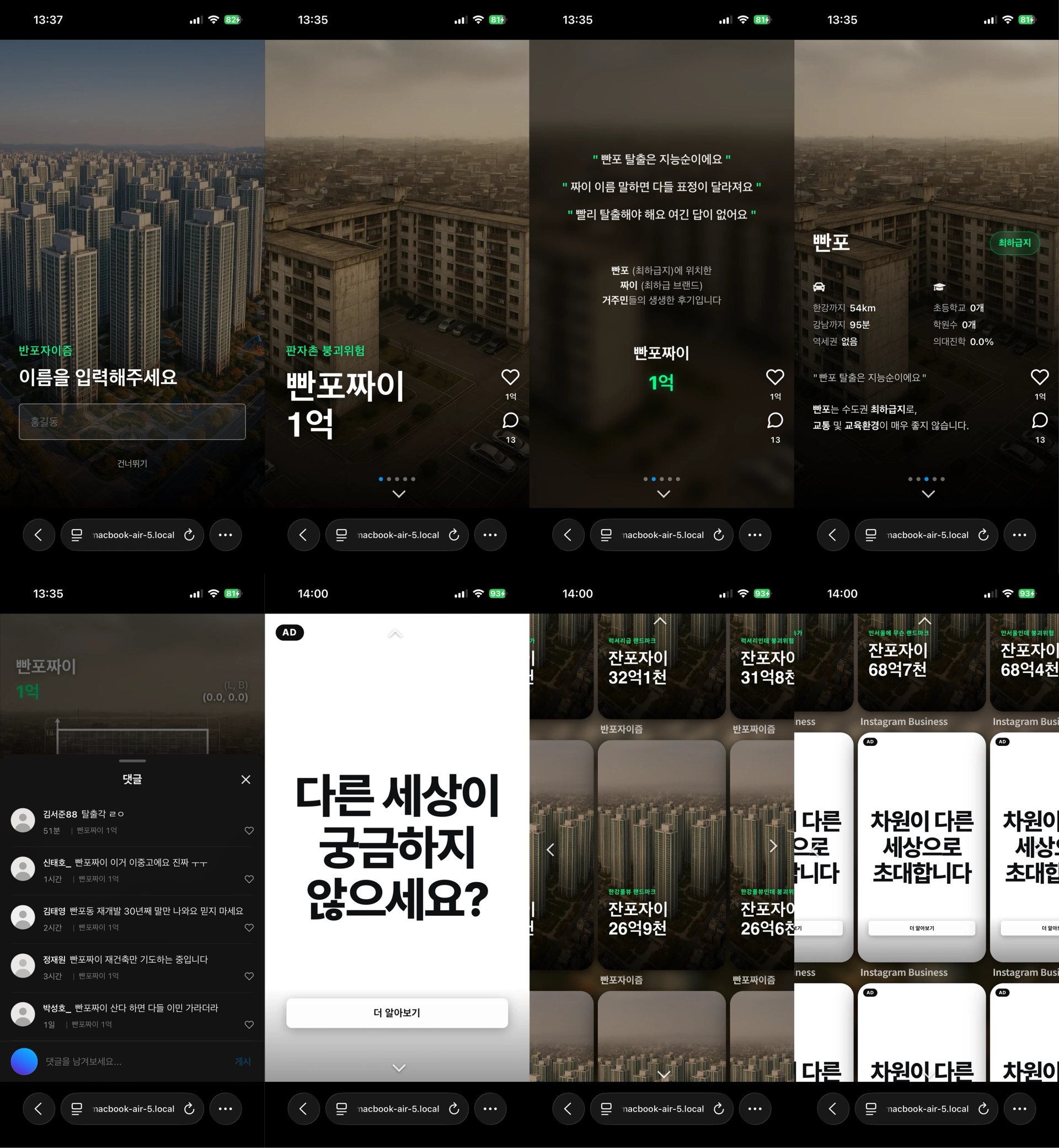
Through iterative mathematical, geometric, and interaction trials, the artists designed the following system: <Banpo-Xism> begins on a two-dimensional L-B plane containing 19 x 19 apartment complexes. Lower-value complexes occupy the bottom-left, while Banpo-Xi sits at the upper-right, with prices ranked according to each apartment’s L/B position. Audience members enter a custom mobile web app, beginning with an Instagram-like vertical feed: a synthetic real-estate social-media world of fictional apartment posts and status-anxious comments such as, “Honestly, people’s faces change when I say I live in Banpo-Xi.” As they doom-scroll, their (L, B) coordinate moves upward. The same movement is updated in real time on surrounding screens, where multiple audience members appear at once, blindly competing to reach the upper-right.
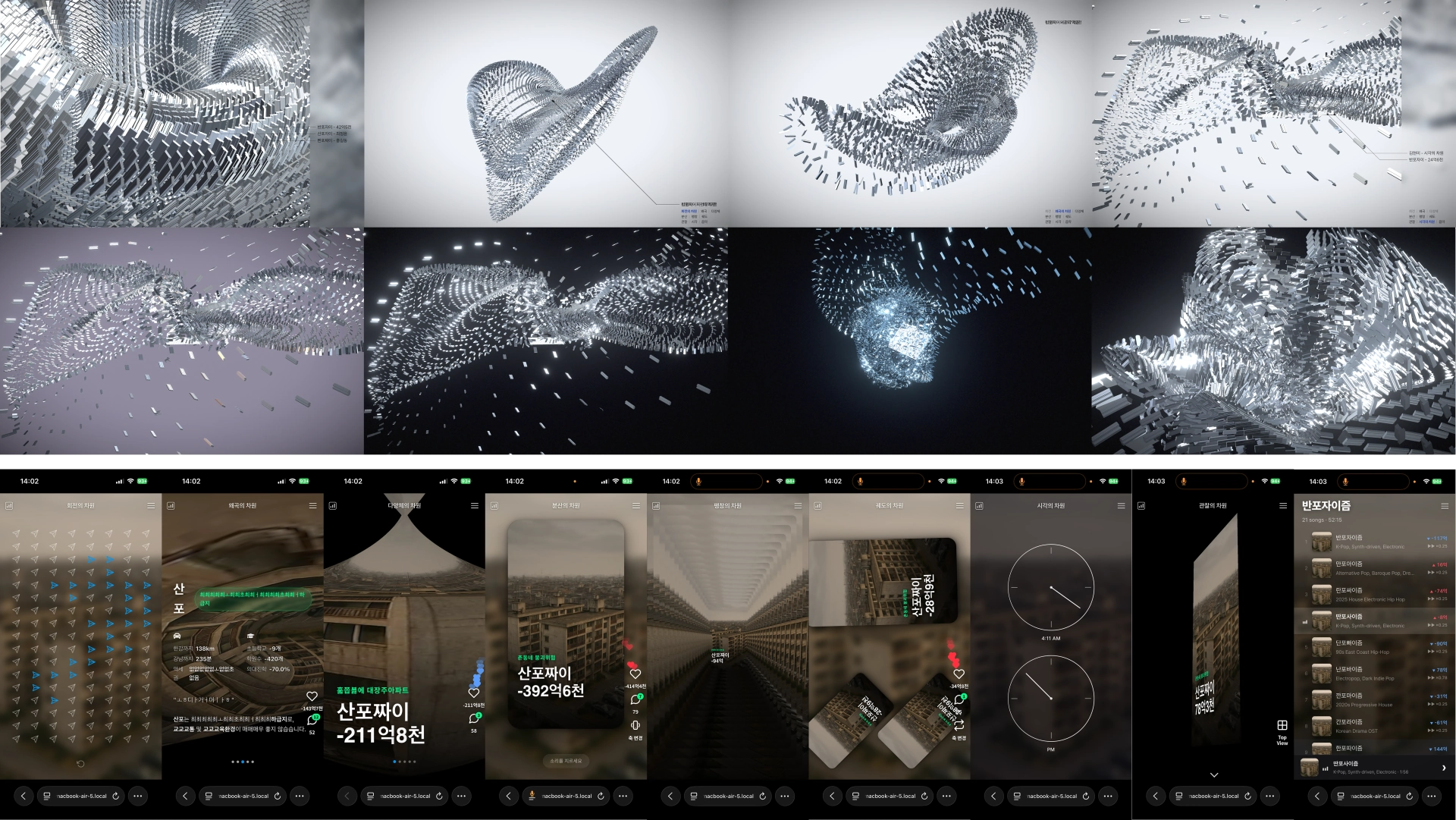
Yet the moment they click an advertisement, “Enter a higher-dimensional world,” they slip out of the two-dimensional plane. Each link reveals a hidden variable beyond L/B, opening an adjustable dimension. As these dimensions are adjusted, the flat apartment plane begins to fold, spin, scatter, and come alive as a differentiable manifold. By touching, shaking, and shouting into their phones, audience members turn hidden constants into interactive parameters, adding dimensions and deforming the field of apartments.
Drawing on differential geometry, <Banpo-Xism> gives mathematical form to a world beyond the flatness of the L-B plane. As the manifold is projected back onto the L-B coordinate, apartment prices fluctuate, revealing Banpo-Xism’s hierarchy as a lower-dimensional projection of a higher-dimensional value system.
Through this structure, <Banpo-Xism> translates a contemporary social thread into an interactive experiment built from technical and mathematical strands. The artists engineered 94,285 lines of custom JavaScript over six months, iteratively testing, editing, and fine-tuning its visual, systemic, and interactive behaviours. This customised software invites audiences to experience, manipulate, and imagine a higher-dimensional world beyond the post-consumerist values of location and brand.
<Banpo-Xism> was exhibited at <Living Geometry> exhbiition in YDP Art Square, and engaged with about 2,000 audiences interacting directly from their mobiles.
© 2026 Experience Design Lab (XD Lab), Jeanyoon Choi